
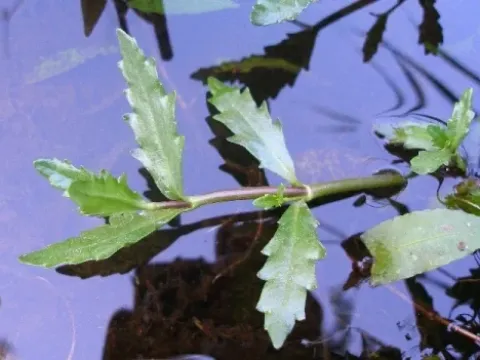
Enydra
Enydra
Enydra (Enydra fluctuans) is typically cultivated in tropical regions, where it is propagated primarily through stem cuttings rather than seeds.
What the section contains


Enydra
Planting usually occurs at the onset of the wet season or during the flooding period when water levels in fields and ponds are sufficient for growth.
Cuttings are placed directly into the mud or shallow water, which promotes rapid root development and establishment of the plant in its semi-aquatic environment.
For large-scale cultivation, farmers ensure that the spacing between rows allows for adequate water circulation and easy access during the harvesting process.
Optimal growth depends on consistent moisture availability, and the initial planting phase must avoid water stress to ensure a high survival rate of the cuttings.
This crop belongs to the Asteraceae family and is recognized as a hardy, semi-aquatic herb that thrives in marshy or waterlogged habitats.
Enydra requires a nutrient-rich environment, often utilizing nitrogen-heavy organic matter found in river sediments or agricultural pond soils.
The plant thrives in warm tropical climates with temperatures ranging between +25°C and +32°C, exhibiting sensitivity to frost or prolonged cool weather.
Sunlight exposure is crucial, although the plant can tolerate partial shade if the water quality remains high and oxygenation levels are sufficient for root health.
Proper water management is essential; while the plant requires water, stagnant conditions coupled with high temperatures can lead to root rot if not monitored.
The yield of Enydra is heavily dependent on the management of pruning and harvesting cycles, which encourage lateral branch development and bushier growth.
Frequent harvesting of apical shoots serves as a stimulus for the plant, resulting in a continuous supply of tender green tops throughout the growing season.
Under optimal conditions, the biomass production per square meter is quite high, making it a sustainable and profitable crop for smallholder farmers.
Productivity is sustained by replacing old stocks after several months to prevent the plant from entering a reproductive stage that yields less flavorful leaves.
Effective nutrient management, including organic fertilization of the water, is key to maintaining high yield levels across multiple harvesting rounds.
The primary threats to Enydra include fungal diseases that manifest as leaf spots, triggered by constant high humidity and lack of air circulation in dense plantations.
Insect pests, particularly aphids and various leaf-eating caterpillars, can cause significant damage to the soft, developing shoots of the plant.
Aquatic mollusks can pose a threat during the early establishment phase by consuming the tender stems of young, newly planted cuttings.
Integrated pest management is often favored over synthetic chemical applications because the crop is usually consumed fresh without extensive processing.
Sanitation practices, such as removing diseased plant material promptly, are critical for preventing the spread of infections within the aquatic growing system.
Harvesting Enydra involves manually cutting the young, succulent shoot tips, typically reaching a length of 20 to 30 centimeters for the best market quality.
The harvesting cycle is rapid, with regrowth allowing for repeated harvests every two weeks, provided the plant remains in a vegetative growth stage.
Post-harvest handling is critical as the tender green shoots are highly perishable and prone to wilting quickly once separated from the water source.
Storage requires keeping the produce cool and moist, often utilizing water-soaked cloths or specialized packaging to preserve the turgor of the leaves.
Market value is determined by the freshness and tenderness of the harvested stems; therefore, timely processing and fast logistics are essential for growers.