
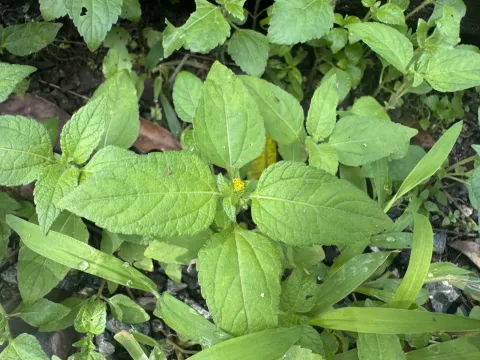
Eleutheranthera
Eleutheranthera
Eleutheranthera is a genus of flowering plants in the Asteraceae family. In an agricultural context, it is typically categorized as an invasive weed rather than a crop.
What the section contains

Eleutheranthera
Seed germination typically occurs during the warmer months, as the plant requires stable soil temperatures of approximately 15 to 20 degrees Celsius to thrive.
The plant demonstrates a rapid life cycle, which allows it to establish itself quickly in tilled fields, especially after significant rainfall events.
Agronomists monitor the emergence patterns of Eleutheranthera closely to prevent the plant from reaching the flowering stage, which marks the start of seed dispersal.
Given the high longevity of its seeds in the soil seed bank, long-term management strategies are required to effectively suppress its population over several years.
Eleutheranthera thrives in tropical and subtropical climates where humidity levels remain consistently high throughout the growing season.
It prefers moist, fertile soils, such as those found in riparian zones or irrigated agricultural lands, though it is quite adaptable to various soil textures.
The plant requires ample sunlight for optimal photosynthetic activity, but it can tolerate light shade when growing in dense vegetation or under canopy.
It is sensitive to prolonged cold spells and frost, which limits its distribution primarily to warmer regions of the world where temperatures rarely drop below freezing.
Competitive vigor is a key characteristic of the plant, as it rapidly consumes water and soil nutrients, often outcompeting slower-growing commercial crops.
As a member of the Asteraceae family, Eleutheranthera can host a variety of fungal pathogens and pests that are harmful to more sensitive agricultural crops.
Common threats associated with high infestations include increased populations of aphids and spider mites, which can easily spread to adjacent fields.
Disease management is complicated by the fact that the plant acts as a reservoir for viruses and bacteria that may impact the overall yield of a field.
Effective control strategies involve a mix of mechanical cultivation, such as hoeing or disking, and the application of herbicides calibrated for broad-leaved weeds.
Farmers are advised to prioritize early intervention, as once the plant establishes a dense canopy, it becomes significantly harder to eradicate without damaging crops.