
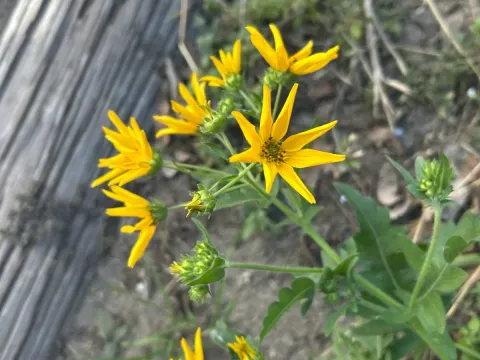
Engelmannia peristenia
Engelmannia
Engelmannia peristenia (commonly known as Engelmann daisy) belongs to the Asteraceae family. In agricultural practice, it is recommended to sow seeds in early spring, once the soil temperature reaches 10-12 degrees Celsius, ensuring uniform emergence.
What the section contains

Engelmannia peristenia
Successful germination requires maintaining optimal soil moisture in the top layer. Seeds may benefit from natural stratification or cold treatment to increase the overall germination energy.
The seeding rate typically ranges from 6 to 10 kg per hectare, depending on seed purity and germination rates. The sowing depth should be kept shallow, between 1 and 2 centimeters, for optimal results.
The plant exhibits slow development during its first year, focusing its energy on establishing a deep, robust root system. Weed management is essential during this stage to prevent competition and ensure healthy growth.
In subsequent years, the plant demonstrates high growth vigor and rapid regrowth after grazing or harvesting, making it an excellent candidate for restoring degraded pasture lands.
Engelmannia is highly drought-tolerant, naturally adapted to open, sunny environments. It thrives in deep, well-drained soils, although it shows high adaptability to various soil types, including loamy or stony ground.
The plant exhibits significant resistance to temperature extremes typical of continental climates. Due to its deep taproot, it can efficiently access moisture from deeper soil layers during extended dry periods.
Full sun is essential for the healthy development of this crop; shading significantly reduces biomass production. Long-term waterlogging should be avoided, as it can cause root rot and decrease plant vitality.
The crop has moderate fertility requirements and responds well to phosphorus-potassium fertilization. Nitrogen supplementation in early spring can be beneficial to stimulate vegetative growth.
A soil pH ranging from neutral to slightly alkaline is ideal for cultivation. The plant is well-suited for rotational grazing systems due to its durability and resilience under standard pasture management practices.
Yields of green biomass depend heavily on precipitation patterns and soil quality. Under optimal conditions, the plant can produce 3-5 metric tons of dry hay per hectare annually with two cuts per season.
Its primary agricultural value lies in its high leaf-to-stem ratio, which is maintained even during hot summer months when other forage grasses often experience dormancy or burn off.
The plant is highly regarded as a high-protein forage source for livestock. Incorporating Engelmannia into pasture mixtures enhances the nutritional value of the diet for grazing animals throughout the season.
Seed production is generally sufficient if proper agricultural technologies are applied. However, growers should monitor maturation closely, as uneven seed ripening can lead to significant shattering if harvest is delayed.
Maintaining a stand density of 15–25 plants per square meter is recommended to optimize forage quality and prevent excessive shading between plant layers.
Engelmannia is naturally resistant to many common plant diseases, likely due to its inherent phytochemical properties. However, high humidity can occasionally lead to powdery mildew outbreaks.
Pests rarely cause major economic damage, although minor occurrences of aphids or leaf-feeding insects may happen in certain seasons. Standard management practices are usually enough to control these without insecticides.
Soil-dwelling pests like wireworms or white grubs represent the primary threat to young seedlings. Pre-sowing seed treatments can effectively mitigate these risks during the establishment phase.
Sustainable grazing is crucial for the long-term health of the crop. Overgrazing can weaken the root system, eventually leading to the encroachment of more aggressive weed species.
Proper drainage management is necessary to prevent stagnant water during the autumn and winter seasons, as excessive moisture often causes root decay, especially in heavier soil types.
For high-quality hay, harvesting should commence during the late bud stage, before the onset of mass flowering. This ensures the best nutritional profile and biomass density for feed.
Field drying followed by baling is the standard practice for hay production. The stems maintain their structure well during mechanical handling, which helps in preserving the quality of the fodder.
Seed harvest is performed using direct or multi-phase methods when the flower heads show signs of browning. Proper moisture control is vital to ensure long-term storage viability.
It is advised not to mow too close to the ground during the final harvest. Leaving a small portion of the stubble helps with snow retention and provides protection for the crown and root system during winter frosts.
To prolong the life of the forage stand, light cultivation between rows 3-4 years after initial seeding can stimulate vegetative regrowth and maintain high productivity levels.