
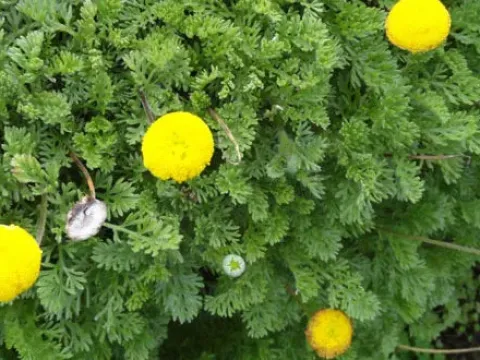
Cotula
Cotula
Sowing of Cotula is primarily conducted in the spring once the soil has warmed up, or before winter in regions with mild climates. For seedling production, seeds are sown in trays in March, maintaining a stable temperature of about 18–20 degrees Celsius.
What the section contains


Cotula
Seeds or ready-made seedlings are planted in open ground following a scheme that depends on the specific species of the plant. Usually, a spacing of 15–20 centimeters between plants is maintained to form a dense carpet.
Cotula seeds are very small, so it is not recommended to bury them deep in the soil during sowing. It is sufficient to lightly press them into the substrate or sprinkle them with a thin layer of sand for better contact with the earth.
An important step is site preparation: it must be completely cleared of perennial weeds. Cotula develops slowly in the early stages, so competition with weeds is detrimental to it.
The optimal time for rhizome division, if vegetative propagation is used, is at the end of spring or the beginning of autumn. This allows the plant to take root before extreme temperatures occur.
Cotula prefers sunny or lightly shaded areas with moderately moist soil. The plant has high adaptability, however, it does not tolerate water stagnation in the root system zone.
The crop is not very demanding regarding soil composition, but it performs best on light, well-drained loams with a neutral or slightly acidic pH. Soil fertility contributes to denser leaf rosette growth.
Watering should be regular, especially during the active vegetative growth phase and in dry periods. The plant is sensitive to the drying of the topsoil layer, which can slow down its development and reduce its aesthetic appeal.
The culture demonstrates moderate frost resistance. In northern regions, light coverage with spruce branches or mulching may be required to prevent root freezing during snowless winters.
To maintain cover density, it is recommended to apply complex mineral fertilizers annually at the beginning of the season. This provides the plant with the necessary nutrients to form high-quality vegetative mass.
The agricultural efficiency of Cotula is measured not by market weight, but by the quality of surface coverage and the speed of space colonization. With proper care, the plant forms a continuous, dense mat that prevents soil erosion.
In the decorative and landscaping sector, yield is viewed as the square meter coverage area during one growing season. Under favorable conditions, the growth can reach significant indicators.
When used as a ground cover crop, Cotula effectively replaces lawn grasses, reducing the costs of regular mowing. This makes it economically advantageous in landscaping large territories.
The plant also finds application in medicine and perfumery, where the aerial part (leaves and flower stalks) is harvested during the flowering period. The raw material yield depends on planting density and watering intensity.
Seed yield can be limited due to the small size and complexity of harvesting, so vegetative propagation is often preferred for commercial purposes.
Cotula has a fairly high immune system, but it can be affected by fungal diseases if humidity conditions are violated. The most dangerous is root rot, which occurs with constant waterlogging.
In conditions of dense plantings, outbreaks of powdery mildew are possible. Prevention consists of ensuring normal air circulation and thinning out areas in a timely manner.
Among pests, snails and slugs can cause the greatest damage by eating the succulent leaves of the plant. For control, both mechanical collection methods and special biological agents are used.
Sometimes aphid infestation is noted, which sucks juices from young shoots. At the first signs of insect appearance, it is recommended to use soft-acting insecticides or soap solutions.
Nematodes can affect the root system in certain types of soil. To prevent their spread, crop rotation should be followed, and planting Cotula in areas where infection foci were previously noted should be avoided.