
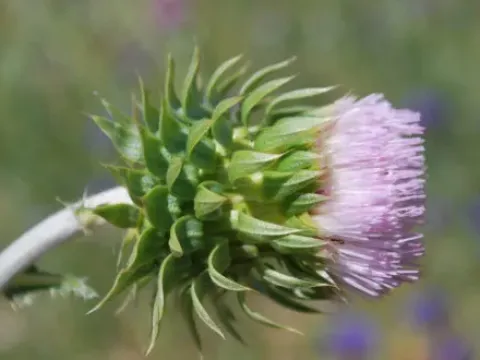
Cotton thistle
Onopordum horridum
Cotton thistle (Onopordum horridum) is a biennial plant belonging to the Asteraceae family. During the first year, it develops a rosette of spiny, grey-green leaves, while in the second year, it produces a tall, branching stem with large flower heads.
What the section contains
Cotton thistle
Sowing should be performed in early spring once the ground has warmed up sufficiently. Seeds require a shallow covering of soil, typically 1 to 2 centimeters deep, to ensure optimal moisture contact and germination rates.
Due to the plant's robust growth habit, appropriate spacing is essential. Planting in rows about 60 centimeters apart allows for adequate airflow and simplifies mechanical cultivation between plants.
Proper field preparation is crucial, as the seeds have high dormancy-breaking capability. Farmers must ensure that the planting site is cleared of competing weeds to prevent overcrowding during the delicate early growth stages.
Once established, the plant exhibits a vigorous growth rate. Early weed management is vital, as the thistle can easily outcompete other crops if not monitored during the establishment phase.
Cotton thistle thrives in sunny, open locations with good drainage. It is highly drought-tolerant, utilizing its deep taproot to access water in deeper soil layers, making it suitable for arid regions.
Soil quality should ideally be fertile, ranging from sandy loam to clay-rich soils. However, the plant is adaptable and can survive in poor soils provided they are not waterlogged, as stagnant water leads to root decay.
The ideal temperature for development ranges between 20 and 25 degrees Celsius. The plant is well-adapted to high solar radiation and can withstand intense heat without significant loss of productivity.
Nutrient requirements are moderate. Over-fertilization, especially with nitrogen, should be avoided as it encourages excessive vegetative growth at the expense of flower development and increases the risk of lodging.
Effective soil aeration is essential for healthy development. Compaction should be minimized to allow for the expansion of the taproot and proper exchange of oxygen in the root zone.
Major threats to Onopordum horridum include fungal diseases such as powdery mildew and various rusts, which thrive in humid conditions and can reduce both the quantity and quality of the harvest.
Pests such as aphids and flower-feeding weevils pose a significant challenge. These insects damage the buds and reproductive structures, leading to diminished seed production and reduced medicinal potency of the flower heads.
Integrated pest management is recommended, utilizing biological controls wherever possible to maintain the purity of the crop for downstream pharmaceutical or industrial use.
Cultural practices, including proper crop rotation and the removal of adjacent host weeds, are the most effective methods to prevent the buildup of pest populations and disease inocula within the field.
Regular monitoring of the crop is necessary to identify early signs of infestation. Timely intervention with selective insecticides can prevent widespread damage during critical growth periods.
The harvest should take place during the peak flowering stage. This is when the secondary metabolites and active compounds are concentrated in the flower heads, meeting the requirements for botanical production.
Mechanical harvesting is generally preferred for efficiency, but it requires careful handling due to the presence of sharp spines on the stems and leaves. Protective equipment is essential for workers during manual handling.
Immediate drying is required post-harvest to prevent spoilage or mold growth. Drying should occur in a well-ventilated, temperature-controlled environment at approximately 40 to 45 degrees Celsius.
For seed production, the heads are allowed to mature fully. The seeds must be threshed and cleaned thoroughly to remove chaff and the prickly bracts that protect the flower heads.
Proper storage is essential to maintain viability. The final product should be stored in a cool, dry place protected from moisture, light, and potential contamination by pests or rodents.