
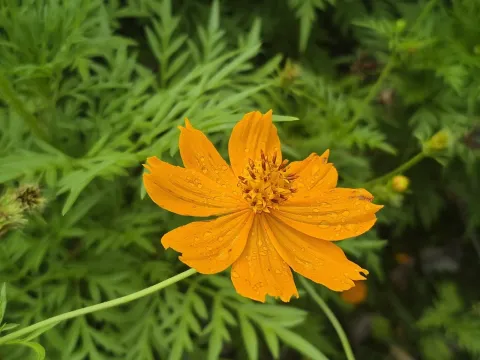
Cosmos
Cosmos
Cosmos belongs to the Asteraceae family. It is a widely cultivated herbaceous plant, primarily grown as an annual in gardens due to its prolific blooming and ease of management in various climates.
What the section contains


Cosmos
Seeds are typically sown directly into the soil after the last spring frost. The soil should be well-warmed, with temperatures consistently above 15 degrees Celsius to ensure rapid and uniform germination of the seeds.
When sowing, cover seeds with a very thin layer of soil, no more than 1 centimeter deep. Cosmos seeds require light to germinate; therefore, burying them too deeply will significantly inhibit the emergence of seedlings.
Thinning is an essential part of the early cultivation phase. Spacing plants approximately 30–40 centimeters apart allows for optimal airflow and light penetration, which is vital for preventing fungal issues later in the season.
For regions with shorter growing seasons, starting seeds indoors 4–6 weeks before the last frost date is highly recommended. This practice ensures that plants are sufficiently developed to begin flowering early in the summer.
Cosmos is a heliophilic crop, requiring at least 6–8 hours of direct sunlight per day. In shaded conditions, plants develop weak, etiolated stems and produce significantly fewer blossoms throughout the season.
The crop thrives in moderately fertile, well-drained, and loose soil. One of the most important aspects of Cosmos care is avoiding excessive fertilization, especially with high-nitrogen fertilizers, which promote leafy growth over flowering.
The plant is highly drought-tolerant once established. Regular watering is only strictly necessary during the seedling phase and during periods of extreme, prolonged heat to prevent premature wilting and stress.
Deadheading, or the removal of spent flowers, is a crucial agronomic practice for Cosmos. It redirects the plant's energy from seed production back into the development of new buds, extending the flowering period until the first frost.
Tall varieties of Cosmos are prone to lodging during heavy rains or strong winds. Providing basic support, such as staking or using netting, ensures the plants remain upright and maintain their decorative integrity.
Aphids and thrips are the primary pests of Cosmos. These insects tend to congregate on the soft, succulent tissues of growing tips and flower buds, causing stunted growth and leaf curling.
Powdery mildew is the most common disease affecting the species, appearing as a white, dusty fungal growth on the leaves. It usually occurs during periods of high humidity and poor ventilation among dense plant clusters.
For pest management, the application of horticultural oils or systemic insecticides is effective when pest populations exceed acceptable thresholds. Integrated pest management promotes the use of natural predators like ladybugs.
Waterlogging in the root zone can lead to root rot. To mitigate this risk, it is essential to cultivate Cosmos in well-draining soil and ensure that irrigation practices do not result in standing water around the crown of the plant.
Fungal infections can be managed by applying fungicides at the first sign of symptoms. Improving air circulation by adjusting planting density remains the best long-term preventive measure against most common diseases.
For decorative purposes, Cosmos stems should be harvested when the flowers are in the semi-bud stage or fully open. Early morning harvesting is preferred as the plant tissue is at its maximum turgidity.
Seed harvesting requires careful timing. The flower heads should be left on the plant until they start turning brown and drying out. Seeds can then be easily brushed off the receptacle by hand.
After collection, seeds must be thoroughly dried in a well-ventilated area away from direct sunlight. Proper drying is vital to prevent fungal contamination and loss of viability during the storage period.
Store cleaned seeds in breathable paper bags in a cool, dry place. With proper storage conditions, Cosmos seeds can maintain high germination rates for up to three or four years.
At the end of the season, after the first frost has killed the top growth, the plants should be removed from the soil. Clean, non-diseased plant material is suitable for composting, adding organic matter back to the garden.