
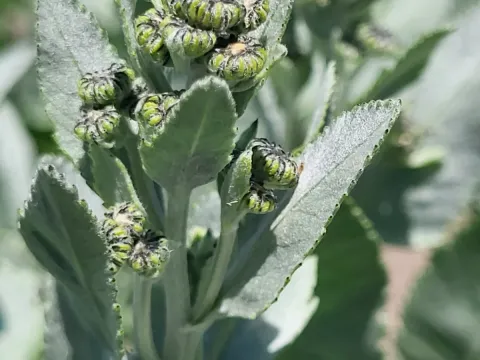
Costmary
Tanacetum balsamitoides
Costmary (Tanacetum balsamitoides) is a perennial herbaceous plant belonging to the Asteraceae family. It is traditionally propagated vegetatively through root division, which ensures that the offspring retain the parent plant's characteristics.
What the section contains
Costmary
When starting from seeds, sow them in the spring in a well-prepared seedbed. Seeds are tiny and should be lightly covered with soil; constant moisture is essential for successful germination in the first few weeks.
The spacing between plants should be approximately 40 to 50 centimeters. This allows for adequate airflow around each plant, which is crucial for preventing humidity-related diseases and ensuring proper growth.
In its first year, the plant focuses on establishing its root system and producing a basal rosette of leaves. It does not typically flower until the second year, allowing the gardener to focus on vegetative growth management.
The plant is highly hardy and adaptable to various climate zones. Once established, it is a low-maintenance perennial that can provide foliage for several years without the need for replanting.
Costmary prefers well-drained, fertile soil with a neutral pH level. While it is tolerant of many soil types, it performs best in loam that is enriched with organic matter to support its vigorous root system.
Sunlight is a key factor in the cultivation of Tanacetum balsamitoides. It requires a location with full sun to partial shade; however, full sun exposure is necessary to maximize the production of aromatic essential oils.
Watering requirements are moderate. The plant is fairly drought-tolerant once mature, but regular watering is beneficial during the early growth stages and throughout the peak of the summer heat.
The ideal temperature for active growth ranges between 18 and 25 degrees Celsius. It can tolerate cooler temperatures, as it is a resilient species that survives winter dormancy in temperate regions effectively.
Soil cultivation, including weeding and hoeing, should be performed regularly. This keeps the soil aerated and minimizes competition from weeds, which could otherwise stunt the development of the young plants.
Powdery mildew is the most common fungal issue for costmary, especially in regions with high humidity or poor air circulation. Proper spacing of plants remains the best preventative measure.
Pests such as aphids and spider mites may target the plant during the growing season. Early detection and the use of insecticidal soaps or biological controls are recommended to preserve the quality of the foliage.
Root rot can occur in soils that are heavy or prone to waterlogging. Ensuring excellent drainage is fundamental to avoiding these issues, as the root system is sensitive to prolonged wet conditions.
Foliar spot diseases may appear if the plants are kept in overcrowded conditions. Removing affected leaves and improving the environment around the plants usually prevents the spread of these pathogens.
Regular inspection and proactive maintenance of the site significantly reduce the impact of these threats, allowing the crop to remain productive throughout the growing season.
Harvesting should be timed for the peak of the blooming season when the leaves and flowers contain the highest concentration of essential oils and provide the most potent fragrance.
Cut the upper stems, leaving enough foliage for the plant to continue its lifecycle. Using clean, sharp tools prevents unnecessary damage to the stem tissue, allowing for quicker recovery of the plant.
The drying process must be performed in a cool, shaded, and well-ventilated area. Rapid drying at low temperatures is essential to maintain the delicate chemical composition of the plant's essential oils.
After drying, store the plant material in airtight containers away from direct sunlight to maintain its aroma and potency for an extended period, usually up to two years.
Uses for the harvested material include culinary applications as a flavoring agent, the production of aromatic potpourris, and traditional medicinal uses due to its antiseptic properties.