
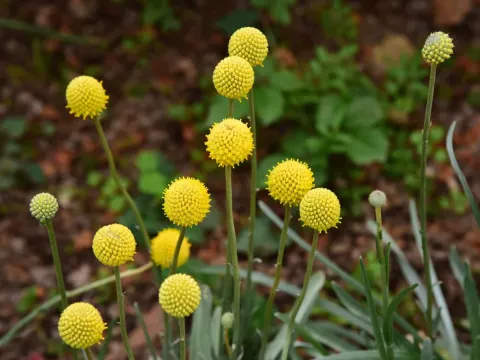
Craspedia
Craspedia hybrids
Craspedia seeds should be sown in late winter or early spring, typically between February and March, to ensure the plants are well-established before the peak summer season.
What the section contains
Craspedia
The seeds require light to germinate, so they should be sown on the surface of the growing medium and pressed lightly into the soil without covering them deeply.
Maintaining a temperature of 20–24°C is essential for successful germination, and containers should be covered to keep the humidity levels consistently high.
Seedlings should be transplanted into individual pots once they develop their first few true leaves to prevent overcrowding and root entanglement in the trays.
Hardening off the seedlings is a critical step before moving them to the field, ensuring they can withstand the environmental conditions of the open ground.
Craspedia hybrids are herbaceous perennials belonging to the Asteraceae family, although they are frequently managed as annuals in commercial floral production.
The plant is native to Australia, which explains its high tolerance for warm temperatures and its adaptation to environments with significant solar radiation.
They thrive in well-drained, sandy-loam soils with a neutral pH, as the root system is highly sensitive to waterlogging and subsequent fungal infections.
While the plant is known for its drought resistance, irrigation is necessary during the vegetative phase to ensure the production of long, strong stems required for commercial use.
Providing adequate spacing of at least 30 cm between plants is vital to promote good air circulation, which helps manage humidity around the base of the plant.
A healthy stand of Craspedia can yield between 10 to 25 blooms per plant, depending on the specific hybrid selection and the intensity of the soil nutrient management.
The primary economic value of this crop lies in the production of fresh cut flowers for bouquets and dried spheres for decorative floral arrangements.
Optimizing yields requires a balanced fertilization program focusing on potassium to strengthen stems and phosphorous to enhance flower development.
Harvesting should occur when the spherical flower heads are fully developed and show consistent coloration across the entire head to ensure high market quality.
Managing the crop for a second flush is possible in some climates by cutting back the primary stems after the first harvest, potentially extending the production window.
Root rot caused by Pythium or Phytophthora remains the most significant threat to Craspedia crops, especially in high-moisture or poorly drained environments.
Pests like aphids and spider mites can infest the foliage, particularly during extended dry spells, leading to stunted growth and reduced stem quality.
Powdery mildew may develop if the planting density is too high or if nighttime humidity levels are consistently excessive without adequate ventilation.
Integrated Pest Management (IPM) strategies, including regular field monitoring and the use of preventative fungicides, are essential for maintaining plant health.
Removing infected plant material immediately upon detection helps limit the spread of pathogens throughout the planting rows during the active growing season.
Harvesting is performed manually by cutting the stems at the base, ensuring that the decorative spherical inflorescences are not crushed or damaged.
For fresh cut flower sales, stems are immediately placed in clean water containers and stored in cool, dark conditions to maintain post-harvest longevity.
When intended for drying, stems are bundled and hung upside down in a shaded, well-ventilated area to ensure the balls retain their shape and color.
Dried Craspedia stems are extremely durable and can be stored for long periods, making them a reliable commodity for year-round floral product distribution.
Proper packaging is necessary for transport to prevent bending of the delicate stems, ensuring the flowers arrive in pristine condition for the end customer.