
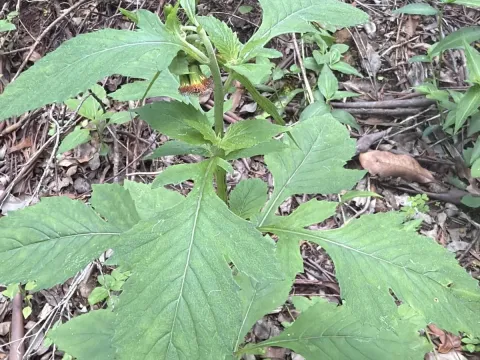
Crassocephalum
Crassocephalum
Sowing Crassocephalum is typically done using seeds, which show high germination rates. In tropical climates, it can be planted year-round, ideally at the start of the rainy season to ensure optimal moisture for establishment.
What the section contains

Crassocephalum
Seeds should be planted at a shallow depth of approximately 0.5 to 1 cm. Providing a loose, fine-textured seedbed encourages rapid emergence and uniform development of the seedlings.
In intensive production, using seedling trays for transplanting is beneficial. This practice allows for better selection of vigorous plants and ensures that the desired plant density is achieved in the field.
For direct seeding, rows should be spaced 30–40 cm apart, with plants spaced 20–25 cm within the row to facilitate air circulation and minimize competition for nutrients.
Regular thinning of seedlings is necessary if the initial sowing was dense, as this prevents etiolation and ensures that the plants receive adequate sunlight for healthy growth.
Crassocephalum, belonging to the Asteraceae family, is a tropical crop that thrives in temperatures ranging from +20 to +30 degrees Celsius. It is sensitive to extreme cold and requires frost-free conditions.
While it prefers full sunlight, it performs well under partial shade during the hottest part of the day, which helps prevent premature flowering and keeps the leaves tender for a longer period.
The crop requires fertile, well-drained soils rich in organic matter. Amending the soil with compost before planting significantly improves both moisture retention and nutrient availability.
Consistent moisture is critical for high-quality production. Irrigation must be managed to keep the soil moist but not waterlogged, as poor drainage is a leading cause of root rot in this species.
A soil pH between 6.0 and 7.0 is ideal. If the soil is too acidic, lime application is recommended to balance the pH and improve the uptake of essential micronutrients.
The plant is highly valued for its rapid growth rate, with the first harvest possible within 4 to 6 weeks after sowing. This makes it an excellent choice for short-cycle crop production.
By selectively harvesting outer leaves rather than uprooting the entire plant, growers can achieve multiple harvests over a period of several months, significantly increasing total yield per hectare.
Proper nitrogen fertilization is key to maximizing leafy biomass. Split applications of organic or synthetic fertilizers help maintain growth momentum throughout the productive life of the plant.
Total yield is highly dependent on effective weed control during the early stages of growth, as the crop can be easily outcompeted by aggressive weeds in its juvenile phase.
Under optimal management, Crassocephalum can produce substantial yields, making it a reliable source of fresh greens for both small-scale household gardens and commercial markets.
Aphids and leaf-eating caterpillars are the primary pests of Crassocephalum. These insects can cause significant cosmetic and physiological damage to the foliage, rendering it unmarketable.
Fungal diseases, such as powdery mildew and various leaf spot pathogens, may occur, especially in humid conditions with poor aeration in the planting beds.
Root rot is a major threat in soils with poor drainage. Once established, this condition is difficult to treat, often leading to the sudden collapse of entire plants.
Integrated pest management, including crop rotation and the use of insect-resistant varieties or biological controls, is essential to mitigate these threats without the heavy use of chemical pesticides.
Proper field hygiene, such as removing debris and infected leaves promptly, plays a crucial role in preventing the spread of diseases within the crop cycle.
Harvesting is performed manually to ensure only high-quality leaves are selected. Growers usually pluck individual leaves or trim the top sections of the stems.
Harvesting in the early morning is highly recommended because the plants are fully turgid. This minimizes post-harvest wilting and helps the produce retain its freshness for longer during distribution.
After harvest, the leaves should be handled gently and kept in a cool, shaded environment to prevent rapid respiration and degradation of quality.
Post-harvest cleaning involves removing dust, soil particles, and any withered or damaged leaves to ensure a premium product that meets market standards.
Packing the produce in well-ventilated containers or breathable bags during transportation is vital to maintain quality until the product reaches the final consumer.