
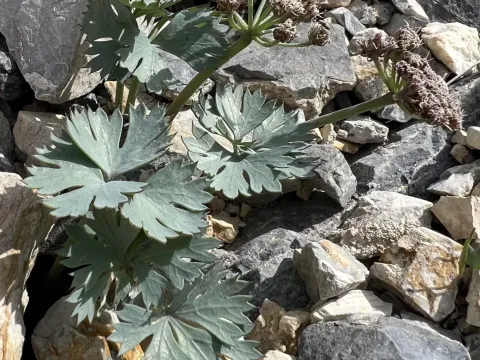
Cymopterus
Cymopterus
Cymopterus, a member of the Apiaceae family, is typically propagated via seeds, which perform best when sown in the fall. This allows for natural cold stratification during winter, ensuring higher germination rates come spring.
What the section contains
 Anise-scented cymopterus
Cymopterus anisatus
Anise-scented cymopterus
Cymopterus anisatus
 Cymopterus corrugatus
Cymopterus corrugatus
Cymopterus corrugatus
 Cymopterus ibapensis
Cymopterus ibapensis
Cymopterus ibapensis
 Cymopterus longipes
Cymopterus longipes
Cymopterus longipes
 Cymopterus macdougalii
Cymopterus macdougalii
Cymopterus macdougalii
 Cymopterus purpureus
Cymopterus purpureus
Cymopterus purpureus
 Cymopterus sessiliflorus
Cymopterus sessiliflorus
Cymopterus sessiliflorus
 Hall's cymopterus
Cymopterus hallii
Hall's cymopterus
Cymopterus hallii
 Lemmon's springparsley
Cymopterus lemmonii
Lemmon's springparsley
Cymopterus lemmonii
 Panamint spring-parsley
Cymopterus panamintensis
Panamint spring-parsley
Cymopterus panamintensis
 Plains spring parsley
Cymopterus glomeratus
Plains spring parsley
Cymopterus glomeratus
 Snow cymopterus
Cymopterus nivalis
Snow cymopterus
Cymopterus nivalis
 Thread-leaf spring-parsley
Cymopterus filifolius
Thread-leaf spring-parsley
Cymopterus filifolius
Cymopterus
Seeds should be planted in well-drained, sandy soil at a shallow depth of approximately 1-2 centimeters. Achieving good soil contact is vital for the seeds to imbibe moisture effectively as the soil warms.
For those using container propagation, it is advisable to keep the pots in a cool, unheated environment to mimic natural conditions. Once the seedlings develop their first true leaves, they can be hardened off and transplanted.
Spacing is a critical factor for long-term health; plants should be set 30-45 centimeters apart to prevent crown rot and allow for adequate airflow between the mature leaf rosettes.
Because the plants are slow to establish, sowing in an area free from invasive weeds is essential. Using a layer of light mulch can help regulate soil temperature and moisture for the emerging sprouts.
This genus originates from arid and semi-arid regions of North America, meaning it thrives in full sun. It requires a location that provides intense light exposure throughout the majority of the day.
Soil quality is paramount, with a strong preference for loose, sandy, or rocky soils that offer excellent drainage. The species cannot survive in waterlogged or heavy clay soils that impede root respiration.
Cymopterus is remarkably drought-tolerant, utilizing a deep taproot to access water in desert-like conditions. Supplemental irrigation is only necessary during extreme droughts while the plant is still establishing its root system.
The plant is well-adapted to wide temperature fluctuations, including cold winters, but it is sensitive to high humidity. Proper site selection should avoid low-lying pockets where cold air or moisture might settle.
A neutral to slightly alkaline pH is ideal for the species. Before planting, a soil test can determine if amendments are needed, as most specimens struggle in highly acidic, nutrient-depleted soil environments.
Yield capacity for Cymopterus is modest, as the plant is primarily a wild-harvested species or a niche garden crop. Yield is measured both in vegetative biomass and the potential for medicinal root extraction.
Maximum biomass production is typically achieved by the third or fourth year of growth. Once the taproot has matured, it can contribute significantly to the total harvestable weight per square meter.
Yield stability is dependent on the management of competing weed species. Because the plant grows relatively slowly, early weeding is the primary driver of consistent output in controlled plots.
Strategic harvesting of seeds from the most vigorous plants can help improve the quality of future generations. Selecting seeds from the largest umbels can potentially increase the plant size over several growing cycles.
While not a major commercial row crop, the potential for using Cymopterus in drought-stricken agricultural zones makes it a subject of interest for sustainable crop research and ethnobotanical studies.
The most significant threat to the culture is root rot, caused by excessive soil moisture and poor drainage. Ensuring that the soil remains breathable is the best defensive measure against fungal pathogens.
Root-feeding larvae, such as wireworms, can damage the taproots, leading to stunted growth. Implementing a proper crop rotation system helps reduce the population of these subterranean pests over time.
Foliar diseases, including powdery mildew, may emerge if the plants are situated in environments with poor circulation and high relative humidity. Thinning the planting area can significantly mitigate this risk.
Aphids occasionally target young foliage during the spring. In organic production systems, these can be managed through the introduction of beneficial predatory insects like ladybugs or lacewings.
Prevention is the best approach; avoid planting near other Apiaceae species that share similar susceptibility to specific soil-borne blights to avoid cross-contamination in the field.
Harvesting the roots of Cymopterus occurs at the end of the season, once the foliage has turned brown and entered dormancy. This timing ensures the highest concentration of phytochemicals in the root system.
The use of a garden fork or mechanical harvester is necessary to lift the roots from the deep, dry soil. Careful handling is required to avoid breaking the long taproots, which lowers their market value.
Seed heads should be harvested when the umbels become dry and the seeds are firm. To prevent moisture damage, seeds should be processed immediately in a low-humidity, warm environment.
Post-harvest processing involves washing the roots gently to remove soil and then air-drying them in the shade. Direct sun exposure should be avoided to prevent the degradation of bioactive compounds.
Once dried, the produce should be stored in breathable, dry containers and placed in a cool location. Following these storage protocols ensures the longevity of the harvest for future culinary or medicinal use.