
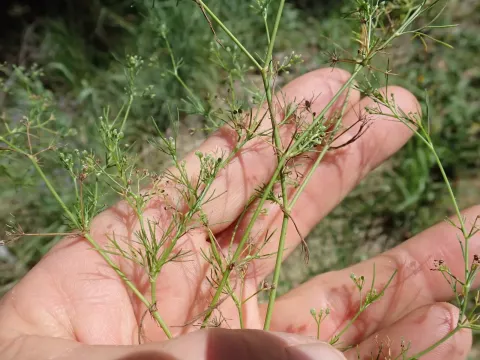
Cyclospermum
Cyclospermum
Sowing Cyclospermum requires careful preparation of the seedbed to ensure a fine tilth, which is essential for uniform germination. Seeds are typically planted in early spring when the risk of severe frosts has passed.
What the section contains

Cyclospermum
The seeding depth should be shallow, generally between 5 to 10 millimeters, to allow the small seeds to access sufficient oxygen and light for emergence. Deep planting often leads to poor stand density.
Row spacing is maintained between 30 and 50 centimeters to allow for efficient weeding and mechanical aeration. This spacing is also crucial for preventing disease outbreaks by ensuring adequate air circulation.
For large-scale cultivation, precision seeding equipment is recommended to ensure consistent spacing. Proper calibration of the seeder is vital to optimize plant population per hectare.
Irrigation immediately following sowing can significantly improve germination rates, especially in regions with low soil moisture during the spring months.
As a member of the Apiaceae family, Cyclospermum thrives in well-drained, nutrient-rich soils. A pH level ranging from 6.0 to 7.0 is ideal for maximizing the availability of soil nutrients.
The plant requires full sun exposure for healthy growth and development. Any significant shading can reduce the yield of vegetative biomass and impact the essential oil content within the plant.
Water requirements are moderate, though consistent moisture is necessary during the active vegetative stage. Drought stress can lead to premature bolting, which reduces the commercial value of the crop.
Cyclospermum adapts well to temperate climate zones but can struggle under conditions of extreme heat or persistent high humidity, which increases the risk of fungal pathogens.
- Well-drained loamy or sandy-loam soils.
- Balanced nitrogen and potassium fertilization.
- Regular removal of competing weed species.
Yield potential depends heavily on soil fertility management and the timing of harvest. Proper fertilization, specifically with nitrogen, promotes robust vegetative development in the early growth stages.
The harvest index is maximized when the crop is gathered before full seed maturity if the foliage is the primary target. If the seeds are the target product, harvest is delayed until the fruit turns a brownish hue.
Average yields can vary significantly depending on the local climate and agricultural management practices. Farmers typically look for uniform maturity across the field to ensure high-quality output.
Post-harvest handling, including rapid drying and proper storage, is essential to maintain the quality of the harvested produce and prevent mold contamination.
Implementing crop rotation protocols helps maintain high yields over several seasons by preventing soil nutrient depletion and the build-up of host-specific pathogens.
Fungal diseases like powdery mildew and Cercospora leaf spot are common threats, especially in humid and dense plantings. These pathogens can significantly reduce the photosynthetic area of the leaves.
Aphids are the most frequent insect pest, feeding on the tender apical growth and acting as vectors for potential viral infections. Regular field inspections are critical during the vegetative growth phase.
Root rot, often triggered by excessive water in the root zone, can cause rapid collapse of the plant stand. Improving field drainage is the primary defense strategy against such soil-borne issues.
Nematodes can cause significant damage to the root system, stunting plant growth. Using nematode-resistant varieties or extended rotation periods helps mitigate this risk significantly.
Weed competition is a major factor that must be managed, as weeds act as hosts for both pests and diseases that affect the main crop, necessitating timely herbicide or mechanical control.