
Cymopterus corrugatus
Cymopterus corrugatus
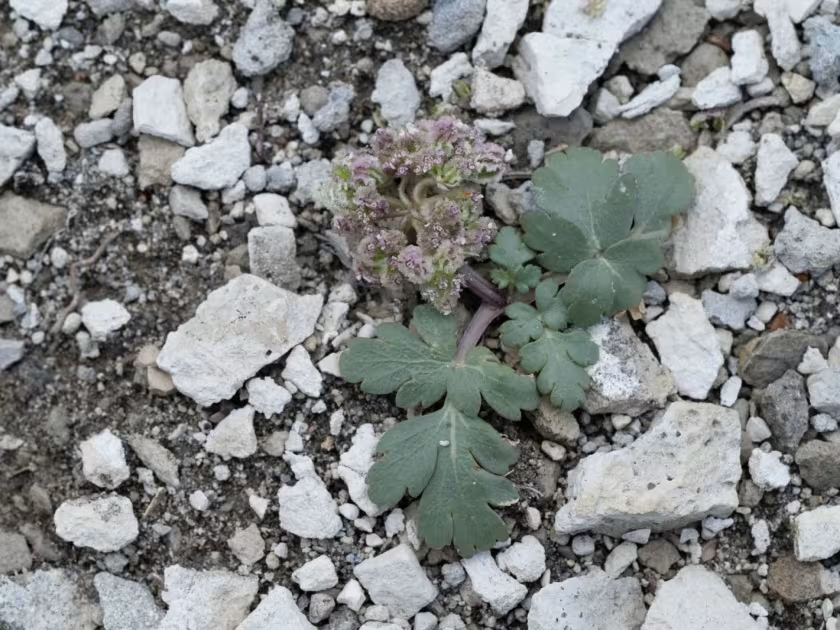
Description
Sowing dates
Cymopterus corrugatus is a perennial herb belonging to the Apiaceae family, commonly found in desert environments. In its natural habitat, seeds disperse in late spring and require cold stratification to break dormancy.
When cultivating, seeds should be sown in late autumn to mimic natural winter conditions. If spring sowing is planned, seeds must undergo cold stratification in a refrigerator for at least six to eight weeks.
Seeds are sown at a shallow depth of approximately 1 centimeter. Using a sandy, fast-draining potting mix or well-drained field soil is essential to ensure that seeds do not rot before they germinate.
Row spacing should allow for mature rosette development, typically 30 centimeters apart. Proper spacing also ensures adequate airflow, which is critical to preventing fungal issues during the early growth stages.
Germination is usually slow and erratic; therefore, maintaining consistent but not excessive moisture in the seedbed is necessary until true leaves appear.
Growing requirements
This species is highly adapted to arid and semi-arid conditions. It thrives in full sun and requires open, unshaded sites to maintain its characteristic compact form and health.
The soil must be well-drained, porous, and preferably sandy or rocky. The plant cannot tolerate heavy clay soils or areas where water collects, as its deep taproot is susceptible to oxygen deprivation.
It is remarkably tolerant of wide temperature fluctuations and is well-adapted to high-altitude desert environments with cold winters and hot, dry summers.
Watering requirements are minimal once the plant is established. Supplemental irrigation is only necessary during prolonged droughts, and even then, deep soaking followed by long drying periods is preferred.
The nutritional needs of the plant are low. Soils naturally lean in nutrients are often better than overly rich or heavily fertilized soils, which can cause excessive foliage growth at the expense of root vigor.
Main diseases and pests
Fungal pathogens are the primary concern for this crop. Phytophthora and Pythium root rots are frequent issues in soils that do not provide optimal drainage, especially if humidity remains high.
Wireworms and other soil-dwelling larvae can feed on the taproot, which significantly weakens the plant and can serve as an entry point for secondary bacterial infections.
Powdery mildew may occur if the plant is grown in areas with poor circulation or high atmospheric humidity. Maintaining proper spacing and selecting sites with good air movement helps mitigate this risk.
Aphids can infest the inflorescences during the active blooming period. While rarely lethal, heavy infestations can reduce seed set and weaken the individual plant's energy reserves for the following season.
Controlling invasive weed species is mandatory. Because Cymopterus corrugatus is a slow-growing plant in its early stages, it is easily outcompeted for moisture and space by faster-growing opportunistic weeds.