
Lemmon's springparsley
Cymopterus lemmonii
Description
Growing requirements
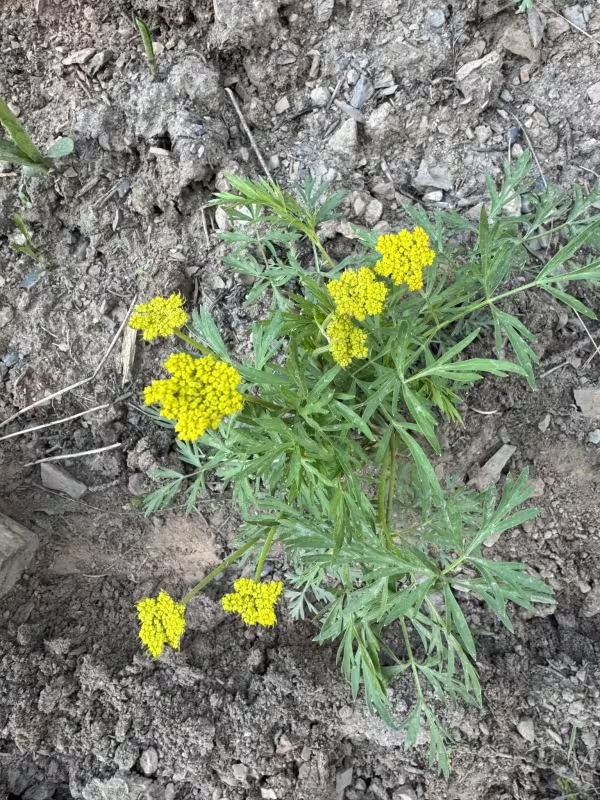
Lemmon's springparsley (Cymopterus lemmonii) is a perennial herb belonging to the Apiaceae family. It is primarily native to the southwestern United States, where it thrives in arid and semi-arid conditions, showcasing remarkable resilience to the local environment.
The plant exhibits specific botanical adaptations, including a robust root structure that allows it to survive in nutrient-poor, dry soils. Its growth cycle is closely tied to seasonal moisture, with the plant entering dormancy during the hottest and driest parts of the year to preserve resources.
In terms of agricultural requirements, this species demands well-drained, porous soils that prevent root rot. Heavy, clay-based soils are generally unsuitable for its cultivation, as they often lead to oxygen deprivation for the root system and promote the proliferation of soil-borne pathogens.
Environmental conditions must mimic its native habitat to ensure successful plant development. High solar exposure is mandatory, and the plant performs best in regions with significant temperature fluctuations, which serve as triggers for its natural life cycle and flowering phases.
The economic and agricultural utility of Cymopterus lemmonii is currently classified as niche. It is mainly of interest for genetic research and ornamental cultivation in xeriscaping projects. Its ability to withstand extreme stress makes it a subject of study for breeding climate-resilient crop varieties.