
Plains spring parsley
Cymopterus glomeratus
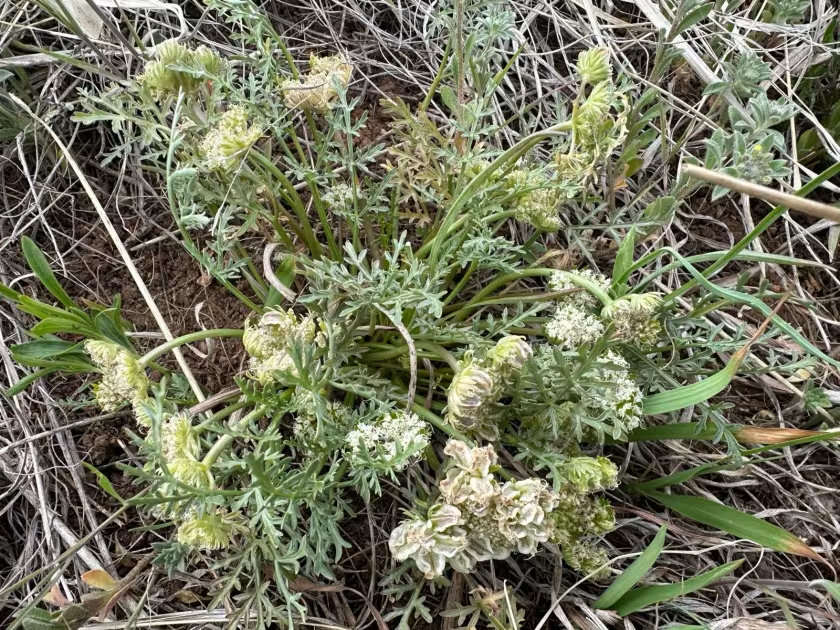
Description
Sowing dates
Plains spring parsley (Cymopterus glomeratus) is a member of the Apiaceae family. It is a perennial herbaceous plant that naturally propagates through seeds following a period of cold stratification.
For cultivation purposes, seeds should be sown in late autumn to ensure they undergo a sufficient chilling period during the winter. This mimics the plant's natural life cycle in the North American prairies.
The seeds should be planted at a shallow depth of 1–2 centimeters in well-draining soil. Providing a loose soil texture is essential for the healthy formation of the plant's taproot system.
Early spring sowing without stratification usually results in poor germination rates. It is recommended to use specialized germination containers or well-prepared garden beds to manage environmental variables.
During the first year, growth is typically slow as the plant invests energy into establishing its root system. Adequate spacing is required to prevent competition and to allow the compact rosette to develop.
Growing requirements
This species is native to dry prairies and rocky slopes, requiring excellent soil drainage. Heavy, water-logged soils are completely unsuitable and will likely cause plant death.
Sandy or gravelly substrates with a neutral to slightly alkaline pH are ideal. The plant is exceptionally well-adapted to arid environments and struggles significantly in humid conditions.
Full sun exposure is mandatory for this species to thrive. Any degree of shade will reduce plant vigor and prevent proper development of the flowering stalks.
The plant demonstrates high cold tolerance, typical of high-plains flora. It survives harsh continental winters without difficulty, provided the soil remains dry.
Irrigation management is crucial; the plant should only be watered when the soil has dried out completely. Over-watering is the most common cause of failure in its cultivation.
Main diseases and pests
Fungal diseases are the primary threat, often triggered by excessive soil moisture. Root rot is particularly lethal and develops quickly in poorly drained conditions.
Pests such as aphids and various weevils can damage the foliage and reproductive structures during the active growing season, requiring monitoring and prompt intervention.
Nematodes may pose a risk to the root system, particularly in agricultural settings where crop rotation is not practiced effectively with other Apiaceae family members.
Weed management is vital during the initial establishment phase, as the plant cannot compete with fast-growing weeds. Hand-weeding should be done carefully to avoid root disturbance.
Rodents may cause damage by feeding on the storage roots during winter months, which can significantly weaken or kill the plant if populations are high in the area.