
Panamint spring-parsley
Cymopterus panamintensis
Description
Growing requirements
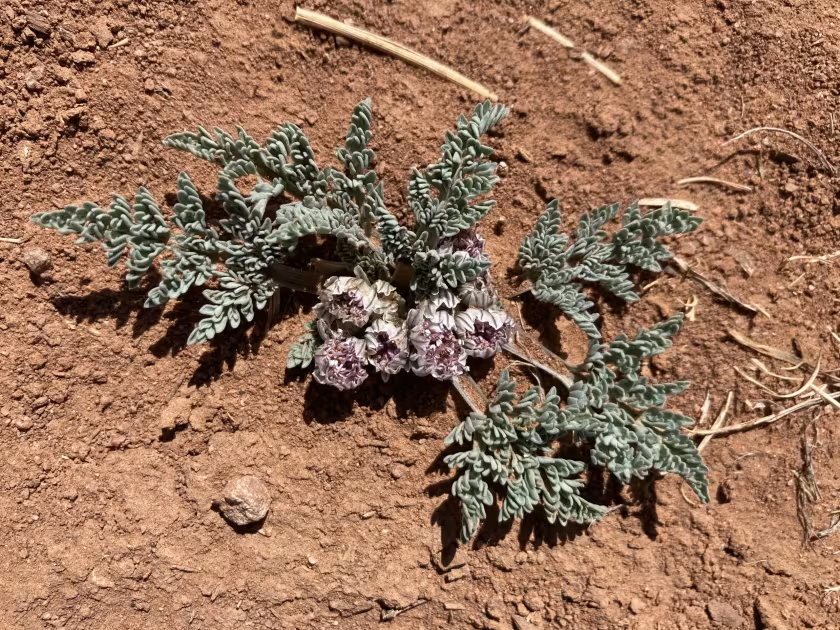
Panamint spring-parsley (Cymopterus panamintensis) is a distinctive perennial herb belonging to the Apiaceae family. It is natively distributed across the high-desert regions of California and Nevada in the United States.
The plant is highly specialized for growth in arid and semi-arid environments. It thrives in well-drained, rocky, or limestone-rich soils that offer very little organic matter but excellent hydraulic conductivity.
Climatic requirements are specific to high-altitude deserts. The species relies on a dormant period during the hot summer and an active growth phase during the cooler, moister spring months.
Its botanical structure is defined by a robust taproot system, which acts as a primary energy reservoir. This adaptation allows the plant to survive severe drought conditions and regenerate rapidly when environmental triggers occur.
While not a traditional agricultural commodity, it holds value in xeriscaping and research focused on desert-adapted flora. Its historical use by indigenous populations highlights its potential as a specialized botanical resource.
Main diseases and pests
The primary threat to Cymopterus panamintensis is root rot caused by poor soil drainage. If the soil remains saturated for extended periods, the root system is highly susceptible to decay.
Pests are generally limited to specific desert insects that consume foliage. However, in enclosed or artificial environments, these pests can proliferate and inflict significant damage on the plant’s structural integrity.
Habitat fragmentation remains the most significant threat to wild populations. Human activity and soil disturbance significantly impair the long-term viability of the colonies located in fragile desert ecosystems.
Pathogenic fungi are a secondary concern in cultivation. Controlling humidity levels and ensuring consistent airflow around the root crown are critical preventive measures for plant health.
Cultivation attempts should prioritize mineral substrates over traditional fertilizers to avoid nitrogen overload, which can weaken the plant and make it more vulnerable to pests and disease.