
Cymopterus sessiliflorus
Cymopterus sessiliflorus
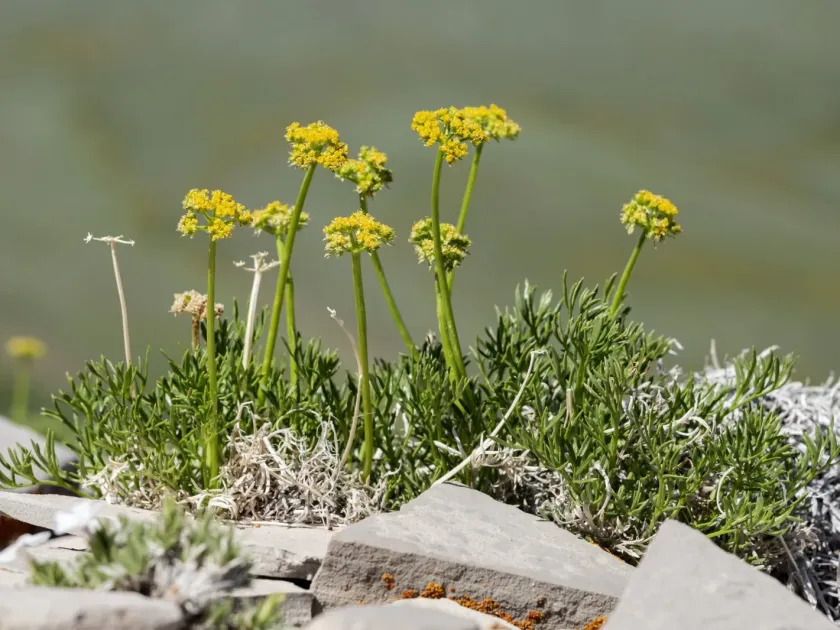
Description
Growing requirements
Cymopterus sessiliflorus, commonly known as a type of mountain parsley, belongs to the Apiaceae family. It is a perennial plant native to the arid and semi-arid landscapes of North America, adapted to harsh environmental conditions.
The plant thrives in rocky, sandy, or well-drained soils where most crops would struggle. It requires full sun exposure and is highly tolerant of drought, making it an excellent candidate for xeriscaping or specialized dryland agriculture.
Botanically, it features a basal rosette of finely divided leaves and sessile or near-sessile flowers. Its growth habit is compact and low to the ground, an evolutionary strategy to withstand desiccating winds in its native habitats.
Agricultural requirements include minimal irrigation and poor-to-moderate soil fertility. High nitrogen levels or heavy organic fertilizers are generally discouraged as they may lead to root rot or reduced hardiness in the plant.
While not a traditional food crop, its potential lies in medicinal research, seed banking, and ecological restoration of disturbed landscapes that require low-maintenance, hardy native vegetation.
Main diseases and pests
The primary agricultural threat to this species is root rot caused by stagnant moisture in poorly draining soils. Maintaining an arid environment is essential for the longevity of the plant.
Common pests such as aphids and leaf-eating beetles can compromise the plant's health during the spring growing season. Integrated pest management is recommended for controlled environments.
Fungal infections, specifically powdery mildew, may manifest in high-humidity periods. Proper air circulation and sunlight exposure are the best natural defenses against these pathogens.
Weed management is vital in the early establishment phase, as the plant is slow-growing and can be easily overwhelmed by more aggressive fast-growing weeds in the vicinity.
Monitoring the soil pH and structure is necessary to avoid compaction, which inhibits the development of the deep taproot system characteristic of this genus.