
Hall's cymopterus
Cymopterus hallii
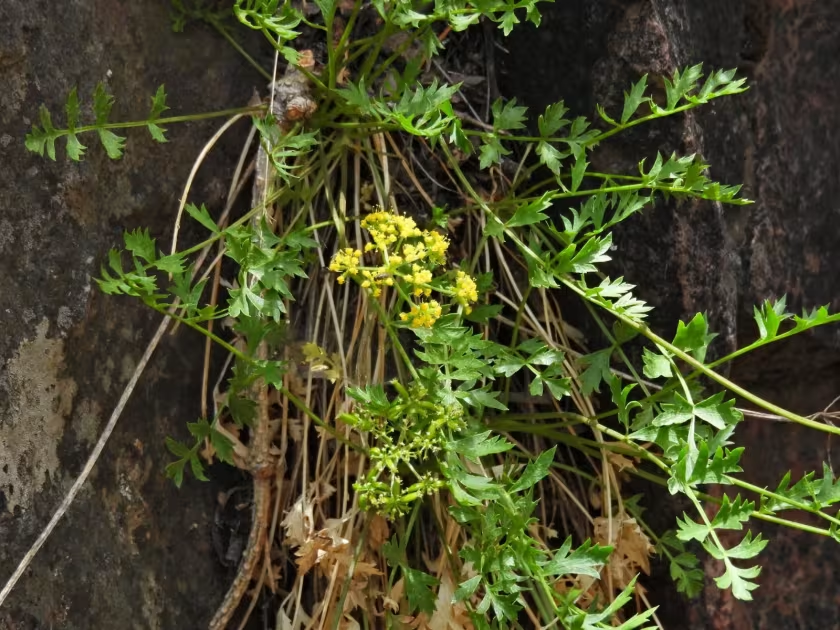
Description
Sowing dates
Hall's cymopterus is a perennial ephemeral species that initiates growth immediately after the snow melts in early spring. Optimal sowing time is in the autumn, as the seeds require a period of natural stratification in cold temperatures for 2 to 3 months to break dormancy.
Spring sowing often results in poor germination rates, so seeds should be artificially chilled if planted late. Sowing depth should remain shallow, roughly 1–2 centimeters, to ensure the seeds have adequate contact with moisture while receiving enough light to trigger germination.
While the plant reproduces mainly through seeds in the wild, division of the caudex or rootstock is possible during the dormant season. It is crucial to maintain proper spacing between rows, typically at least 30 centimeters, to allow for full development of the basal rosette.
Following the sowing process, applying a light mulch of organic matter or gravel helps prevent the surface from drying out too quickly. Seeds usually emerge when soil temperatures reach 8–10 degrees Celsius, coinciding with the early spring awakening.
Development is relatively slow during the first year, focusing mainly on establishing a root system rather than above-ground biomass. Transplanting should be performed exclusively during the plant's dormant period to avoid damaging the delicate growing point.
Growing requirements
Hall's cymopterus, a member of the Apiaceae family, is naturally adapted to rocky, desert, or arid landscapes. The primary requirement for successful cultivation is excellent soil drainage, as the plant cannot tolerate waterlogged conditions which rapidly lead to root rot.
The soil should have a light texture, such as sandy or gravelly loam, with a neutral to slightly alkaline pH. Heavy clay soils are unsuitable and should be avoided or heavily amended with grit to improve porosity and aeration for the root system.
Although highly drought-tolerant, the plant benefits from moderate moisture during the active growing season in spring. During the summer heat, the plant enters dormancy, and the above-ground parts die back; at this stage, irrigation must cease entirely to prevent rot.
Full sun exposure is essential for the healthy development of this species. Shaded conditions will lead to weak, elongated growth and significantly increase susceptibility to various fungal and bacterial pathogens.
The species requires a climate with distinct seasonal variations and cold winters to complete its life cycle. It is highly resistant to low temperatures, making it suitable for growing in regions with significant temperature fluctuations throughout the year.
Main diseases and pests
Root rot, primarily caused by excessive moisture and poor drainage, remains the most significant threat to Hall's cymopterus populations. Fungal pathogens like Fusarium and Pythium thrive in wet conditions and can devastate an entire crop in a very short time.
Soil-dwelling pests, including wireworms and white grubs, can cause damage by feeding on the rootstock. Good field sanitation and practicing a proper crop rotation cycle are recommended strategies to minimize the impact of these pests.
Aphids may occasionally infest the developing inflorescences during the spring flowering phase. If intervention is required, manual removal or the application of soft-soap solutions is preferred to protect local pollinators and maintain ecological balance.
Nematodes are another hidden threat that can compromise the health of the root system, emphasizing the importance of planting in clean, sterile, or properly managed soil. Incorporating cover crops can sometimes help manage the soil microbiome effectively.
- Root rot (Fusarium spp.)
- Aphid infestations
- Soil-borne nematodes
- Wireworms