
Cymopterus longipes
Cymopterus longipes
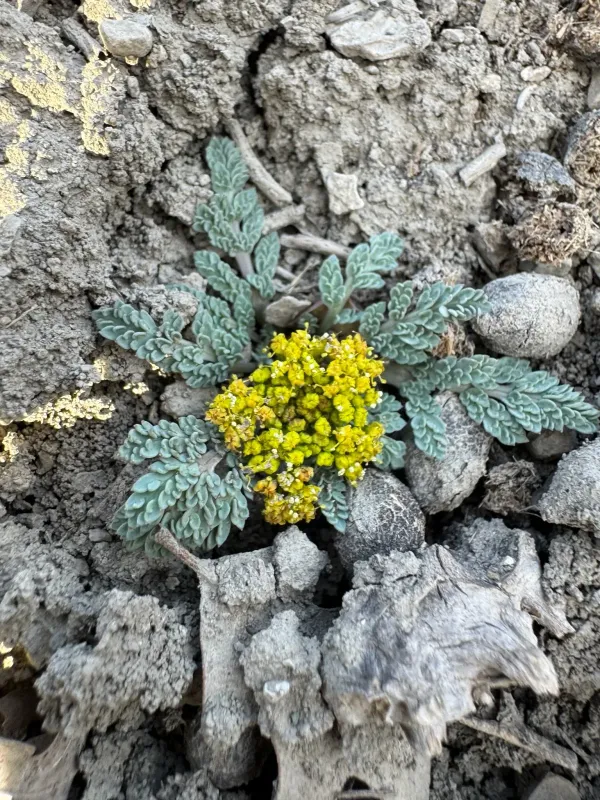
Description
Sowing dates
Cymopterus longipes is native to arid environments, and its seeds require specific conditions to germinate, usually involving a period of cold stratification.
Field sowing is best performed in late autumn to allow the seeds to experience winter temperatures and moisture, which breaks their natural dormancy.
The seeding depth should be shallow, as small seeds often struggle to emerge if buried under too much soil, which could impede successful establishment.
In greenhouse settings, seeds should be kept at temperatures between 0 and 5 degrees Celsius for several months to mimic winter conditions.
Once germinated, the seedlings exhibit slow initial growth, primarily developing a basal rosette of leaves and requiring protection from competing weeds.
Growing requirements
This crop belongs to the Apiaceae (parsley) family and is well-adapted to the harsh, dry climates found in its native North American distribution.
The species requires well-drained, sandy, or rocky soils, as it is highly susceptible to root rot in conditions where moisture lingers too long.
Full sun exposure is essential for the healthy development of this plant; it does not perform well in shaded areas or locations with high humidity.
The soil should ideally have a neutral to slightly alkaline pH, mirroring the conditions of the open plains and dry steppes where it naturally occurs.
Its drought tolerance is exceptional, supported by a deep taproot that helps the plant access limited water resources during the hot summer months.
Yield
While not a traditional broad-acre crop, the yield of plant material is influenced by soil nutrient availability and the length of the growing season.
In managed systems, biomass production is relatively low due to the species' slow-growing nature and specialized adaptation to survival over rapid accumulation.
Harvesting usually focuses on specific plant parts, such as leaves or roots, depending on the intended commercial or medicinal application of the species.
Consistent irrigation during the early growth phase can slightly improve overall vigor, though it must be carefully balanced to prevent root diseases.
Predicting commercial yields requires localized field trials, as the plant responds strongly to its specific microclimate and environmental stressors.
Main diseases and pests
The primary threats to this species in cultivation are fungal pathogens caused by waterlogged soils or excessive humidity levels during the cooler seasons.
Pests such as root-feeding larvae and nematodes can pose significant risks, especially in soils that have not been adequately prepared or sanitized.
Over-fertilization with nitrogenous compounds is a known mistake that weakens the plant's natural defenses and makes it more prone to infections.
Aphid infestations can occur on flower stalks, which might reduce seed set if the goal of cultivation is to maintain a sustainable seed supply.
Implementing proper spacing and ensuring excellent airflow around the plant canopy are the best defensive strategies against most common threats.