
Xylopia elliptica
Xylopia elliptica
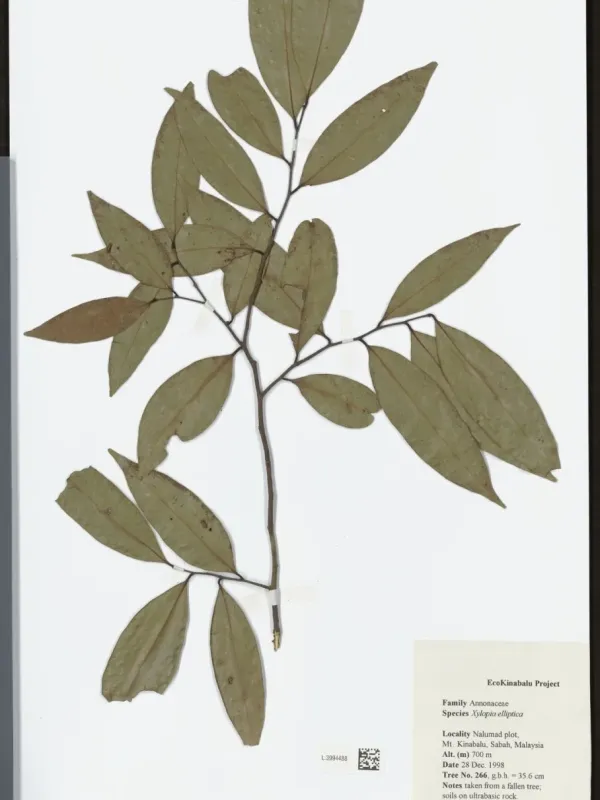
Description
Growing requirements
Xylopia elliptica is a species of tree belonging to the Annonaceae family. It is native to the tropical regions of South America, with its primary distribution documented in the diverse forest ecosystems of Brazil.
The plant thrives in a tropical climate characterized by consistently warm temperatures and high humidity levels throughout the year. It lacks natural resistance to frost, making it strictly suitable for tropical environments.
Soil requirements for this crop focus on well-drained, nutrient-rich substrates. It is essential to prevent waterlogging, as the root system of Xylopia elliptica is susceptible to decay if exposed to excess soil moisture for extended periods.
Light exposure is a critical environmental variable. As a forest-dwelling species, it adapts well to partial shade, which protects the younger trees from excessive solar radiation and dehydration in early developmental stages.
Effective management includes maintaining a stable microclimate and monitoring soil pH levels. Ensuring organic matter enrichment through mulching can mimic the natural forest floor environment, significantly improving growth rates.
Harvesting
Xylopia elliptica is valued for its bark and fruits, which contain high concentrations of phytochemicals. These components have demonstrated potential in pharmaceutical research and aromatic extract production.
Harvesting is performed manually to ensure only mature, high-quality specimens are collected. Proper harvesting techniques prevent unnecessary damage to the tree bark, which is crucial for the longevity of the plant.
Post-harvest processing involves air-drying the collected raw material in ventilated areas. This controlled drying process is vital to preserve the volatile compounds that define the economic value of the product.
Industrial applications include the extraction of aromatic oils used in perfumery and specialty manufacturing. These oils are prized for their unique chemical profile and relative rarity in global markets.
Sustainability protocols are highly recommended when harvesting from wild populations to ensure the plant's natural regeneration. Systematic cultivation in controlled environments is the preferred method for long-term supply chain stability.