
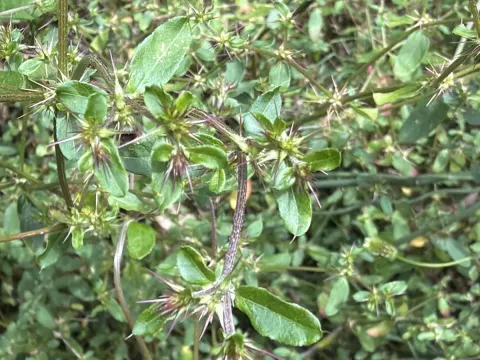
Nyssanthes
Nyssanthes
Nyssanthes is a genus of flowering plants belonging to the Amaranthaceae family. These plants are typically characterized by their robust structure and ability to thrive in challenging, arid environments, primarily native to the Australian continent.
What the section contains
Nyssanthes
The distribution of Nyssanthes is concentrated in regions with low annual rainfall. They are highly adapted to sandy or gravelly soils where other vegetation might struggle, making them resilient survivors in the ecosystem but problematic in agricultural settings.
Botanically, the plants are often recognized by their stiff, spine-tipped bracts that protect the flowers and seeds. This structure is not only a defense mechanism against herbivores but also an aid in dispersal, as seeds cling to passing animals.
Growth requirements include significant sunlight exposure and well-drained substrate. They do not tolerate waterlogging, which limits their presence to specific well-drained soil types found in their natural range, including grasslands and scrublands.
From an agricultural perspective, understanding the biology of Nyssanthes is essential for land management. Their capacity to germinate in poor soil conditions and compete with beneficial plants makes them a subject of interest for weed control strategies in arid climates.
The primary agricultural threat posed by Nyssanthes relates to its impact on livestock management. The sharp, hardened bracts can cause significant irritation and injury to the mouths and hides of grazing animals, making infested pastures less suitable for forage.
In crop production, Nyssanthes acts as a competitive weed. Its rapid growth rate during favorable conditions allows it to overshadow small crop seedlings, competing intensely for nitrogen, phosphorus, and vital soil moisture.
Management of this weed often requires a combination of mechanical and chemical approaches. Shallow tillage performed before seed set is effective in reducing the density of future generations in the soil seed bank.
Chemical control focuses on the use of herbicides targeting the Amaranthaceae family. Proper timing and the inclusion of surfactants are critical to penetrating the plant's cuticular layers, especially when the plant is in its mature growth stage.
Biological threats to the plant include various beetles and insects that feed on the foliage. While these natural predators do not always eliminate the weed, they can suppress its spread and contribute to the overall balance of the local vegetation cover.