
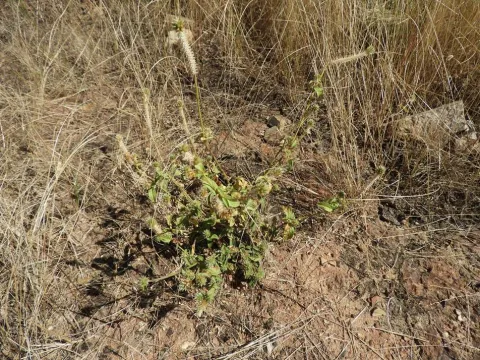
Pandiaka
Pandiaka
Sowing Pandiaka seeds should occur when soil temperatures reach 18–20 degrees Celsius, ensuring optimal germination conditions. The seeds are small and should be sown at a shallow depth of approximately 0.5 to 1 cm, followed by gentle soil compaction to improve moisture retention.
What the section contains
Pandiaka
Consistent soil moisture is essential during the initial stages of germination, although waterlogging must be strictly avoided to prevent seed rot. For field production, row spacing of 30–45 cm is recommended to ensure proper plant development and adequate airflow.
As a member of the Amaranthaceae family, Pandiaka is highly sensitive to cold temperatures during its early growth stages. Any risk of frost must be avoided, making the timing of sowing a critical factor in the success of the crop in its native and cultivated regions.
Seeding rates can be adjusted based on the specific end-use of the crop; higher densities are used for biomass harvesting, while lower densities are preferred for seed production to allow for better branching and light penetration. Proper spacing minimizes competition for nutrients.
The biological cycle is naturally triggered by the onset of rainy seasons. In agricultural settings, mimicking these conditions through controlled irrigation immediately after sowing can help ensure uniform emergence and uniform crop stands across the entire field.
Pandiaka thrives in open, sunny locations as it is a highly photophilous plant. Insufficient sunlight will lead to spindly growth and a decrease in the concentration of secondary metabolites, which are essential for its medicinal and botanical value.
The plant is not overly demanding regarding soil fertility and performs exceptionally well on well-drained sandy or loamy soils. Ensuring good drainage is paramount, as the root system is highly susceptible to hypoxia if the soil remains waterlogged for extended periods.
Known for its significant drought tolerance, Pandiaka is well-adapted to arid environments. Its physiological mechanisms allow it to maintain homeostasis even under conditions of water scarcity, making it a potentially valuable crop for marginal lands.
Fertilization should be handled with caution; an excess of nitrogen often results in excessive vegetative growth, which can weaken the plant's structural integrity and inhibit the development of secondary metabolites. Organic amendments are generally preferred over intensive chemical fertilizers.
Optimal growth occurs at temperatures ranging between 25 and 32 degrees Celsius. While the plant can withstand extreme heat, prolonged temperatures above 38 degrees may cause it to enter a state of dormancy, necessitating careful monitoring of water levels during heatwaves.
Harvesting for medicinal purposes is best timed during the peak flowering phase, when the accumulation of active compounds in the leaves and stems is at its maximum. This stage usually occurs between 90 and 120 days after the initial emergence of seedlings.
Harvesting involves cutting the stems and inflorescences using sharp, clean tools. It is recommended to perform this task in the early morning, once dew has evaporated but before the intense afternoon heat, to preserve the quality of the raw material.
Drying is a critical step in post-harvest processing. The collected material should be spread in thin layers in a well-ventilated, shaded area or a temperature-controlled dryer kept below 40 degrees to prevent the degradation of sensitive phytochemicals.
Seed collection is performed when the inflorescences show signs of maturity, typically indicated by a change in color and seed hardness. Growers must be proactive, as some species of Pandiaka have a tendency to shatter or release seeds upon physical contact once fully mature.
Post-harvest cleaning involves winnowing or using sieves to remove debris and impurities from the seed lot. Storing seeds in airtight containers in a cool, dry place ensures the longevity and viability of the material for future planting seasons.