
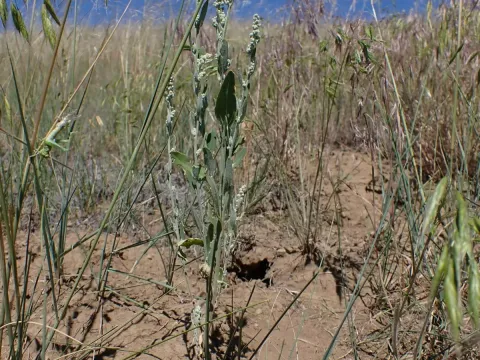
Narrowleaf goosefoot
Chenopodium leptophyllum
Sowing of Narrowleaf goosefoot is typically performed in late spring once the soil temperature has consistently reached the required levels for seed germination.
What the section contains
Narrowleaf goosefoot
The seeds should be planted at a shallow depth, usually not exceeding 1-2 centimeters, as they are small and possess limited energy reserves for emergence.
A well-prepared seedbed with fine soil structure is essential to ensure uniform germination and to allow the roots to establish quickly in the topsoil.
Row spacing should be managed to accommodate mechanical maintenance, while maintaining a density that helps the crop suppress early-season weed competition.
Proper moisture management during the germination phase is critical, as the small seeds can dry out rapidly if the soil surface is not adequately maintained.
Narrowleaf goosefoot (Chenopodium leptophyllum) is a member of the Amaranthaceae family, native to the arid and semi-arid regions of North America.
The crop thrives in well-drained soils and exhibits remarkable tolerance to sandy or rocky soil textures, where many other traditional crops would struggle.
As a drought-tolerant plant, it possesses a deep taproot system that enables it to access water deep within the soil profile during dry spells.
It prefers full sun exposure to maximize photosynthetic activity, which is crucial for achieving high biomass yields and successful seed maturation.
The species is highly adaptable to various soil pH levels, although it performs best in neutral to slightly alkaline soil environments common in its natural range.
The biomass yield of Narrowleaf goosefoot is significantly influenced by early-season fertilization and the availability of essential micronutrients in the soil.
Seed yield varies depending on environmental conditions; late-season rain can sometimes interfere with the maturation process and cause harvest difficulties.
When managed under intensive agricultural practices, the crop shows potential as an unconventional pseudocereal or forage alternative in dryland farming systems.
Yield stability is generally high, as the plant is well-adapted to the climatic stressors often found in its native geographic areas.
Strategic timing of harvest is the primary factor limiting total realized yield due to the natural tendency of the seeds to shatter when fully ripe.
The crop is susceptible to aphid infestations, particularly during the vegetative stage, which can lead to leaf curling and reduced plant vigor.
Powdery mildew can become a significant issue in high-density plantings when humidity levels are elevated or air circulation is obstructed.
Certain soil-borne pathogens can impact the root system if the soil remains waterlogged for extended periods, necessitating good field drainage.
Integrated Pest Management (IPM) strategies are recommended, focusing on crop rotation with non-Amaranthaceae species to break pest life cycles.
Regular field scouting is essential to identify early symptoms of pests or diseases, allowing for timely intervention and mitigation of potential losses.
Harvesting for grain should be initiated when the seeds reach physiological maturity and the plant begins to turn color, indicating lower moisture levels.
Swathing is a common practice used to allow the crop to finish drying uniformly in the field before it is collected by a combine harvester.
Adjusting the threshing cylinder speed is vital during mechanical harvest to prevent seed damage while ensuring all grains are separated from the panicles.
Post-harvest cleaning and drying to safe moisture levels are critical to preventing spoilage, especially if the seed was harvested under damp conditions.
Forage harvesting should be timed before the onset of flowering to ensure the highest protein content and digestibility of the harvested plant material.