
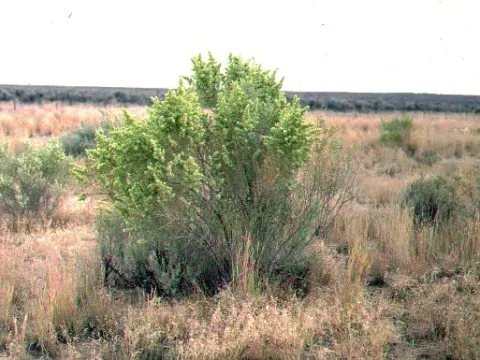
Nuttall's saltbush
Atriplex nuttallii
Nuttall's saltbush (Atriplex nuttallii) is a perennial subshrub belonging to the Amaranthaceae family. It is a resilient species naturally adapted to the harsh conditions of the arid and semi-arid regions of North America.
What the section contains
Nuttall's saltbush
The plant is highly regarded for its ability to thrive in saline and alkaline soils where conventional crops fail. This characteristic makes it a vital tool for the reclamation of degraded and salt-affected agricultural lands.
Botanically, Nuttall's saltbush features a deep-reaching root system, which allows it to access subsoil moisture. The foliage is covered in fine, reflective scales, an evolutionary adaptation to minimize water loss under intense solar radiation.
Optimal growth requires well-drained soil and full sun exposure. While it is extremely drought-tolerant, it does not perform well in waterlogged conditions, making appropriate site selection a prerequisite for successful establishment.
The species serves as an essential forage source for both livestock and wildlife. Its high mineral content and sustained nutritional value in late seasons provide a necessary dietary supplement in extensive grazing systems.
In a managed field setting, Nuttall's saltbush is relatively resistant to standard pathogens. However, fungal diseases can occasionally manifest if the plant is grown in areas with poor airflow and excessively high humidity.
Insects such as leaf-eating beetles and certain species of caterpillars may pose a threat by feeding on the foliage. While usually controlled by natural predators, heavy infestations might require integrated pest management strategies.
Root rot is the most common concern, usually caused by improper soil drainage. Ensuring that the soil structure is loose and well-aerated is the primary defense against such soil-borne pathogens.
Competition from invasive weeds during the early establishment phase is the most significant hurdle. Young plants are slow to grow initially and must be kept free of competitive plants to reach maturity.
Virus transmission by aphids can occur, which emphasizes the need for regular crop inspection. Removing weed hosts from the surrounding area is a recommended practice to maintain the health of the saltbush stand.