
Noaea
Noaea
Noaea is a genus of plants belonging to the family Amaranthaceae, formerly classified within the Chenopodiaceae family. These are predominantly xerophytic subshrubs that have adapted to the extreme conditions of arid and semi-arid environments.
What the section contains

Noaea
The origin of the genus is linked to the arid zones of Eurasia, spanning territories from Southeastern Europe to Central Asia and the Middle East. The plant favors rocky slopes, saline soils, and desert steppes where typical agricultural crops struggle to survive.
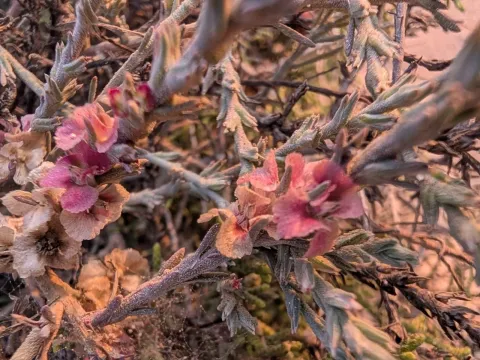
Botanically, Noaea appears as a heavily branched shrub with spiny leaves, a structural defense mechanism against herbivory. Its small flowers are arranged in spike-like inflorescences, and the fruits feature wing-like structures that facilitate seed dispersal by wind, known as anemochory.
The plant exhibits exceptional tolerance to soil salinity and moisture deficits. Its deep and extensive root system allows it to extract water from deeper soil horizons, making it a critical species for stabilizing shifting sands and preventing soil erosion in degraded landscapes.
Agricultural utility of Noaea remains limited. Within its native range, it is primarily viewed as a candidate for the phytoremediation of degraded lands or as a competitive weed in cereal fields and pastures, which can potentially impact forage quality and crop productivity.