
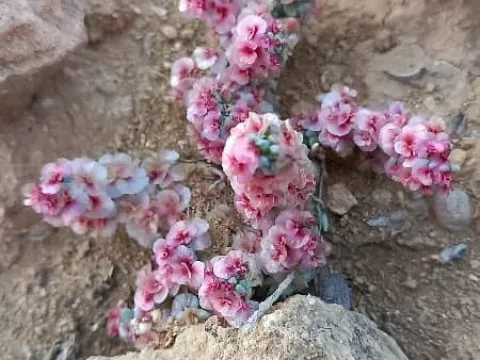
Halogeton sativus
Halogeton sativus
Sowing Halogeton sativus should be scheduled for the spring season once soil temperatures consistently reach 10–12°C. Seeds require adequate soil moisture from snowmelt to trigger germination.
What the section contains
Halogeton sativus
The seeds are small and should be planted at a shallow depth of 1–2 centimeters. Using precision planters helps to ensure uniform distribution and optimal plant density across the field.
Seeding rates depend on the intended use; higher densities are preferred for biomass production, while lower densities are optimal for seed harvesting purposes.
Seedlings typically emerge within 10–15 days under favorable conditions. It is crucial to monitor the soil surface to prevent crusting, which can hinder seed emergence.
The crop exhibits rapid initial growth, which helps in suppressing competing weed species naturally, reducing the need for mechanical or chemical intervention.
Halogeton sativus is a member of the Amaranthaceae family and is recognized for its exceptional ability to thrive in highly saline environments where other crops fail.
The plant is highly drought-tolerant and well-adapted to arid and semi-arid climates, thriving under intense sunlight and high temperature fluctuations.
It prefers well-drained, sandy, or light loam soils with sufficient mineral content, specifically targeting areas with high salt concentrations.
No shading is tolerated by this species; it requires full solar exposure throughout its entire growth cycle to reach its maximum productivity potential.
Proper soil aeration is beneficial for root development, although the plant has developed biological mechanisms to withstand anaerobic conditions in harsh saline environments.
Biomass yield for Halogeton sativus is directly correlated with environmental conditions, particularly soil salinity levels and moisture availability during the growth phase.
Average biomass production typically ranges between 10–15 tons per hectare, with higher yields possible under controlled irrigation or favorable seasonal rainfall.
Seed production is an important aspect of the crop, with yields ranging from 300 to 600 kg per hectare, requiring careful timing to avoid seed shedding.
The crop's nutritional profile makes it a candidate for specific livestock feed supplements, provided that the concentration of oxalates is managed correctly.
As a halophyte, the plant serves as a tool for phytoremediation, aiding in the stabilization and improvement of degraded saline-alkali agricultural soils.
While naturally resilient to extreme conditions, the crop can be susceptible to root rot if fields are plagued by waterlogging or poor drainage systems.
Specific insect pests that target the reproductive organs can impact seed quality, necessitating periodic monitoring throughout the flowering and seed-set phases.
Preventative measures such as proper crop rotation cycles are recommended to minimize the buildup of soil-borne pathogens in the production area.
Minimizing soil disturbance and avoiding excessive chemical inputs helps preserve the natural balance of beneficial soil microorganisms that support the crop.
Early detection of pest infestation allows for targeted interventions, keeping the crop healthy without the need for large-scale chemical applications.
The optimal harvest window for green biomass is during the flowering phase, as this period offers the best balance of nutrient quality and biomass volume.
Mechanical harvesting using forage harvesters is efficient for large-scale operations, allowing for immediate processing or preservation of the harvested material.
For seed harvesting, a two-stage process—cutting followed by threshing—is recommended to prevent significant losses caused by the natural shattering of mature seeds.
After harvesting, the remaining crop residues are valuable for soil improvement, as they contribute organic matter and help modify soil structure over time.
Proper storage of the harvested biomass is essential to prevent moisture accumulation and spoilage, ensuring the longevity and quality of the feed material.