
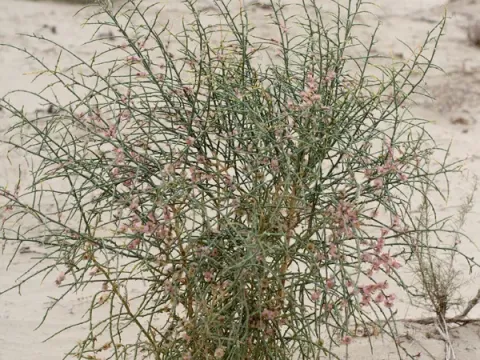
Halothamnus
Halothamnus
Sowing Halothamnus typically occurs in autumn or early spring, aligning with the natural moisture cycles of arid environments. The germination process requires stable soil moisture levels to ensure the successful establishment of the seedlings before the onset of extreme heat.
What the section contains


Halothamnus
For agricultural purposes, seeds are sown in rows to allow sufficient space for the root system to develop, which is vital for the plant's survival in saline or dry conditions. Shallow planting is recommended because the small seeds have limited energy reserves to emerge from deep soil layers.
Soil temperature must be consistently above 15 degrees Celsius to trigger active germination. Minimal soil tillage is required, focusing on slight surface loosening to prepare the seedbed without disturbing the natural soil structure that protects against evaporation.
Rolling the soil after sowing is a necessary step to establish good soil-to-seed contact, preventing the light seeds from being displaced by winds. Maintaining adequate moisture during the first few weeks is crucial for high emergence rates.
As the plant has significant natural regeneration capacity, controlling plant density is important to prevent competition for moisture in deeper soil layers. Proper spacing ensures long-term viability and productivity of the cultivated stand.
Halothamnus belongs to the Amaranthaceae family and is recognized as a typical halophyte, thriving in environments with high soil salinity. The plant is perfectly adapted to arid zones where water scarcity and salt accumulation make standard crop production impossible.
The ideal environment includes well-aerated soils and open areas with high solar exposure. The plant's high tolerance for heat allows it to continue vegetative growth during the hottest months when most other flora becomes dormant.
Agricultural use of Halothamnus is mostly aimed at restoring degraded lands and using salt-affected soils for grazing. The plant's deep root system allows it to reach deep-seated moisture, making it resilient even in prolonged drought conditions.
Soil drainage is a critical requirement, as waterlogging is detrimental to the plant's root health. It performs best on elevated terrain or slopes where water moves freely, preventing the accumulation of excess moisture that causes decay.
With its unique physiological mechanisms, the plant manages salinity effectively, accumulating salts in its tissues to survive. This adaptation makes it an invaluable asset for farmers working in harsh, saline-impacted desert ecosystems.
The biomass yield of Halothamnus varies based on soil conditions and the availability of seasonal precipitation. In productive years, it provides a stable source of forage for livestock, particularly sheep, goats, and camels, which rely on such desert vegetation.
Yield is typically measured by the accumulation of dry matter, which provides critical nutritional value during the lean seasons. While not an intensive forage crop, it serves as an essential safety net for livestock survival in arid territories.
Sustainable grazing management is essential for maintaining consistent yield. Periodic exclusion of livestock from specific areas allows the plant to replenish its energy stores in the roots and regenerate effectively for the following season.
Beyond forage production, the plant is valued for its soil-stabilizing properties. By preventing wind erosion, Halothamnus maintains the integrity of the soil surface, which indirectly supports the overall productivity of the grazing area.
Improved productivity can be achieved on sites where minimal land preparation has been carried out, though the plant is generally low-maintenance and does not require complex fertilization programs to thrive.
Halothamnus possesses natural defense mechanisms, including high salt concentration in its tissues, which discourages most common pests. However, some specialized insects related to the Amaranthaceae family may occasionally cause damage to the succulent shoots.
Fungal pathogens represent the primary biological threat, typically appearing during unseasonably wet conditions. Excess moisture around the stem base can lead to rot, which is often a sign of poor drainage or improper water management at the site.
Root-knot nematodes can impact the plant in sandy, light-textured soils, resulting in stunted growth. Rotating grazing sites and preventing intensive, continuous pressure on one area helps manage nematode populations naturally.
Weed competition is a significant concern during the seedling stage. Aggressive annual weeds may compete for limited surface moisture, so light weeding during the first year of establishment is crucial for the success of the stand.
The most significant threat is overgrazing by livestock, which causes physical trampling and prevents young plants from maturing. Maintaining an appropriate stocking density is essential for the long-term conservation of the population.
Harvesting in an agricultural context primarily involves controlled grazing. The best time to allow livestock into the fields is just before the plant enters the intense fruit-bearing stage, when the leaves and stems are at their peak nutritional quality.
When harvesting for hay, mechanical cutting should be performed at a height that preserves the crown of the plant, ensuring it can continue to sprout. This careful cutting method is key to maintaining a permanent stand of Halothamnus.
Seed collection requires precise timing, as the fruits mature and release seeds very quickly. Harvesting should be performed immediately upon maturity to avoid massive seed losses due to wind dispersal, which would jeopardize future crop density.
Post-harvest handling involves cleaning the seeds of their outer bracts and storing them in a cool, dry environment. High-quality seeds retain their viability for several seasons if kept away from moisture and direct heat.
Leaving certain areas of the plot unharvested is a recommended practice to ensure natural reseeding. This approach reduces the need for frequent re-sowing and maintains the ecological balance of the arid landscape.