
Halocnemum
Halocnemum
Halocnemum is a perennial subshrub belonging to the Amaranthaceae family. It is a quintessential halophyte, evolutionary adapted to extremely high soil salinity levels where most agricultural crops cannot survive.
What the section contains

Halocnemum
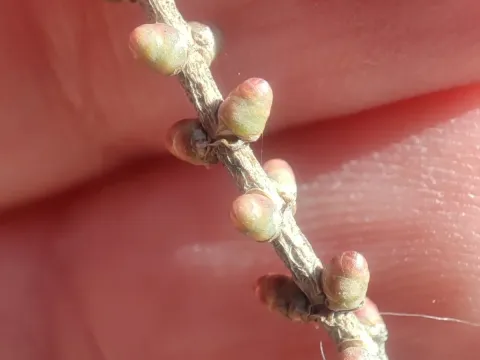
The plant features distinct morphology, with stems consisting of short, fleshy segments designed to store water and accumulate salts. Its robust root system penetrates deeply into the substrate, ensuring survival in harsh semi-desert and salt marsh environments.
The primary distribution range includes the Mediterranean, Central Asia, and the Caucasus. The species thrives in solonchaks and the margins of drying salt lakes, where soil solutions are saturated with chlorides and sulfates.
For optimal growth, Halocnemum requires high summer temperatures and specific moisture regimes. Despite its exceptional tolerance to salinity, the culture is highly sensitive to the waterlogging of its root system by freshwater, which can be fatal.
In terms of agricultural use, Halocnemum is considered a promising species for the phytoreclamation of degraded saline lands. Its biomass serves as roughage for camels and sheep, although it should be used with caution due to high mineral content.
Halocnemum exhibits high resistance to common agricultural diseases due to the unique chemical composition of its tissues. The high concentration of salts within its cells creates an inhospitable environment for most fungal and bacterial pathogens.
The main threat to wild populations comes from specialized insects, particularly certain types of weevils. However, major outbreaks are uncommon, and chemical control measures are generally unnecessary for this wild-growing species.
Human impact represents the most significant risk: overgrazing in natural habitats leads to grassland degradation and the destruction of young shoots. Additionally, the drying of natural water bodies and fluctuating groundwater levels pose substantial threats.
Pests rarely cause significant economic damage since the plant is not cultivated on a massive industrial scale. However, seed damage by specific phytophagous insects may limit natural regeneration during particularly dry growing seasons.
Protection strategies for this culture focus primarily on sustainable grazing management and the prevention of physical damage to saline soil structures. Standard agricultural pest control protocols are not currently applicable given the species' niche environment.