
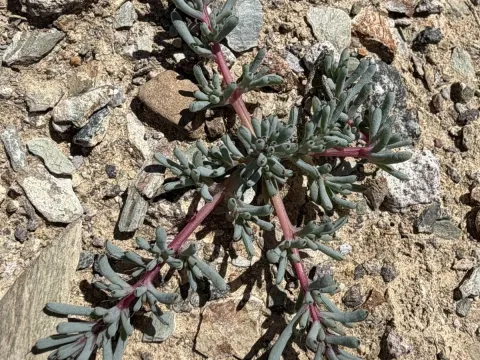
Halogeton
Halogeton
Halogeton (Halogeton glomeratus) is a herbaceous annual plant belonging to the Amaranthaceae family. In agricultural contexts, it is strictly considered a noxious weed rather than a crop, known for its ability to invade degraded rangelands rapidly.
What the section contains

Halogeton
The life cycle begins in early spring when seeds germinate under minimal moisture conditions. The vegetative stage continues through late autumn, allowing the plant to establish a deep root system resistant to drought.
Propagation occurs solely via seeds, which exhibit high viability and can persist in the soil bank for multiple years. A single plant can produce up to hundreds of thousands of seeds, which are efficiently dispersed by wind.
Agronomists suggest close monitoring of fields during the early spring months. Early intervention at the seedling stage is critical to prevent the formation of massive, irreversible infestations.
The plant utilizes C4 photosynthesis, providing a competitive advantage over other vegetation during high-temperature periods and maximizing growth efficiency in harsh climates.
Halogeton possesses exceptional ecological plasticity, enabling it to thrive in extremely dry environments. Its native range spans arid regions of Central Asia, though it has become a major concern in the western United States.
It prefers saline soils where most conventional crops would fail. The plant is a halophyte, capable of accumulating salts within its tissues, which aids in managing osmotic stress in alkaline and salty environments.
The species has minimal climatic requirements, easily enduring high temperatures and severe moisture deficits. It is most commonly found on disturbed alkaline or saline soils with low plant competition.
Effective management requires maintaining a healthy, dense vegetation cover. Bare soil patches are prime locations for new invasions, making land stewardship a primary defense mechanism.
Phytosanitary measures are essential for prevention. This includes cleaning machinery and equipment before moving between fields to avoid transporting seeds into uninfested areas.
The primary threat posed by Halogeton is its toxicity to livestock, specifically sheep and cattle. The plant accumulates high concentrations of oxalates, which are lethal upon ingestion.
Diseases affecting Halogeton are rare due to its robust biological nature and high tolerance for stress. This lack of natural pathogens contributes to its status as a persistent invasive weed.
Pests that feed on Halogeton do not exert enough pressure to significantly reduce its population density. Consequently, chemical control and mechanical removal remain the most reliable methods for management.
Ingestion of the plant leads to severe kidney damage and renal failure in grazing animals. Therefore, early identification and eradication of patches are necessary for animal safety on rangelands.
Integrated vegetation management, including reseeding with competitive, drought-tolerant species, is the recommended long-term strategy for suppressing this hazardous invasive plant.