
Hoary goosefoot
Chenopodium incanum
Hoary goosefoot (Chenopodium incanum) is a member of the Amaranthaceae family. It is an annual herbaceous plant known for its high resilience and ability to thrive in arid environments where water availability is extremely limited.
What the section contains
Hoary goosefoot
The species originates primarily from arid and semi-arid regions of North America. Its distribution range is concentrated in areas characterized by sparse rainfall, extreme summer temperatures, and intense solar radiation, which the plant manages effectively.
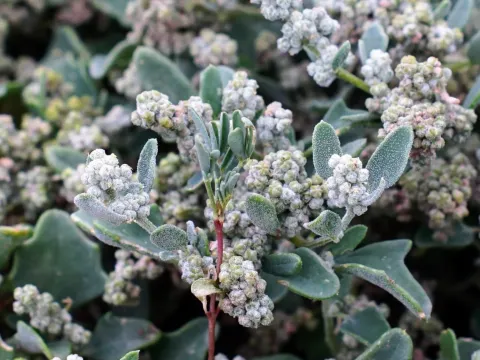
Botany-wise, the plant is easily identified by the fine, grayish-white indumentum covering its leaves and stems. This physical trait serves as a crucial adaptation, reflecting excessive sunlight and reducing water loss through transpiration.
The plant demonstrates a strong preference for well-drained, sandy, or rocky soil substrates. It is not demanding in terms of soil fertility, often colonizing disturbed sites or marginal lands that are unsuitable for traditional crop cultivation.
In terms of agricultural management, Chenopodium incanum is often treated as a wild relative of crop species. While it is not widely cultivated as a primary food source, its physiological mechanisms are of interest for studies on drought tolerance in plants.
The main threat posed by hoary goosefoot in agricultural settings is its competitive nature. It rapidly utilizes available soil moisture and nitrogen, significantly reducing the yield potential of surrounding cash crops in semi-arid zones.
Typical plant health issues involve various species of aphids that thrive on its foliage. It also acts as a host for certain fungal pathogens, including types of mildew that can potentially migrate to more sensitive agricultural cultivars in the field.