
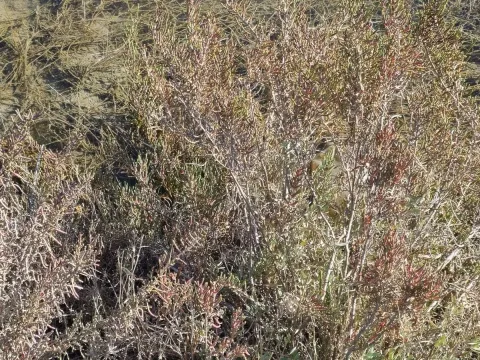
Halostachys
Halostachys
Halostachys is a genus of salt-tolerant shrubs belonging to the Amaranthaceae family. These plants are recognized as extreme halophytes, specifically adapted to thrive in highly saline soils where osmotic stress prevents the growth of standard agricultural crops.
What the section contains

Halostachys
The native distribution of Halostachys spans the arid and semi-arid regions of Central Asia and parts of China. It typically inhabits saline marshes, river floodplains, and the edges of salt lakes, demonstrating high resistance to severe drought and temperature fluctuations.
Botanically, Halostachys is characterized by succulent, jointed stems that exhibit reduced, scale-like leaves. This morphology is an evolutionary strategy designed to reduce transpiration and maintain internal water balance in extremely harsh and hyper-saline environments.
The plant has strict requirements for its substrate, specifically high concentrations of salts such as sulfates and chlorides. It actively accumulates these salts in its succulent tissues, which is essential for its physiological processes and internal osmotic regulation.
In terms of хозяйственного (economic) use, Halostachys serves as a vital component in phytoremediation projects aimed at stabilizing degraded saline soils. Additionally, it is utilized as browse for camels and small ruminants during the winter season when other forage is scarce.
The primary threats to Halostachys populations involve significant alterations to hydrological regimes, such as dam construction or large-scale irrigation projects that change soil salt concentrations. Such environmental shifts can compromise the plant's natural habitat.
While the plant is generally resilient, it may be susceptible to root rot if soil drainage is compromised. Over-irrigation, intended to freshen the soil, is ironically detrimental to this specific halophyte, leading to physiological damage and decreased vitality.
Pest pressure is relatively low in native populations, as the high salt content in the plant tissues acts as a natural deterrent against generalist herbivores. However, specialist sap-sucking insects may occasionally colonize the succulent stems.
Overgrazing remains a significant concern, especially when livestock numbers exceed the carrying capacity of desert rangelands. Sustainable grazing management is essential to ensure that Halostachys stands can regenerate and continue to protect the soil surface from erosion.
Conservation strategies for Halostachys focus on maintaining the natural salinity levels of its native environment. Monitoring soil parameters and prohibiting the conversion of salt-affected lands into non-suitable agricultural fields are critical steps for its preservation.