
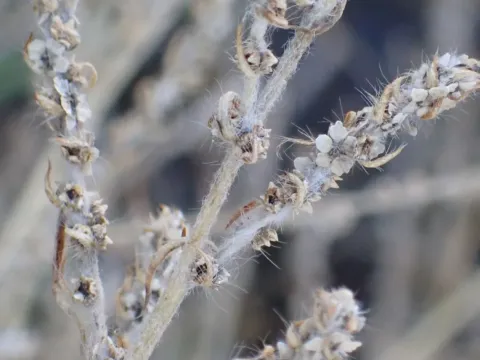
Kochia
Kochia scoparia
Kochia scoparia is typically sown in the spring as soon as the soil reaches temperatures of 8–10 degrees Celsius. The optimal sowing window falls between mid-April and early May, depending on the climatic zone of the region.
What the section contains
Kochia
To achieve uniform emergence, seeds should be sown shallowly, at a depth not exceeding 0.5–1 cm. The crop exhibits high germination energy, leading to visible shoots within 7–10 days under favorable conditions.
Seeding rates depend on the intended use; for hay or green fodder, row sowing with 30–45 cm spacing is recommended. Higher plant density results in thinner, more tender stems, which significantly enhances the quality of the livestock feed.
Late autumn sowing is also a viable option, allowing seeds to utilize early spring moisture from melting snow. However, this method requires higher seed rates to account for potential losses during the winter months.
It is important to note that kochia is prone to self-seeding, so when planning crop rotation, it is essential to choose plots carefully to avoid field weediness in subsequent years.
Kochia, belonging to the Amaranthaceae family, is a remarkable xerophyte capable of withstanding extreme heat and prolonged drought. This characteristic makes it an indispensable crop for arid regions and saline soil conditions.
The plant has few strict soil requirements, thriving on sandy, loamy, and even saline substrates. An optimal soil pH ranges from 6.0 to 8.0, and the crop is highly responsive to nitrogen availability, which promotes vigorous vegetative growth.
Light intensity is critical for development; kochia is a long-day plant that requires maximum sunlight for optimal biomass production. In shaded areas, stems tend to become spindly, lose structural integrity, and decrease in nutritional value.
Early in the vegetative stage, the crop requires moderate moisture to establish a robust root system. Once mature, however, the plant becomes extremely drought-tolerant, employing specialized physiological mechanisms to handle osmotic stress.
The crop possesses high ecological plasticity, allowing for successful cultivation in both steppe and forest-steppe zones. It easily endures significant diurnal temperature fluctuations typical of continental climates.
The biomass yield of kochia depends directly on management practices and nitrogen availability. Under proper cultivation, producers can expect a yield of 20 to 40 tonnes of green mass per hectare per season.
To maximize biomass production, 1–2 applications of nitrogen fertilizer during the active tillering phase are recommended. This stimulates side shoot growth and significantly increases the density of the vegetative canopy.
The crop is utilized for hay production, haylage, and as a productive grazing source. It is crucial to harvest before stems become lignified to ensure the highest possible nutritional value and palatability for livestock.
A unique advantage of kochia is its ability to produce a second cutting under favorable moisture conditions. The plant recovers rapidly after harvest, making it an excellent component of green fodder supply chains.
The nutritional profile of kochia is comparable to alfalfa, particularly in its crude protein content. The plant is rich in essential amino acids, carotenes, and micronutrients vital for the health of farm animals.
Kochia scoparia is naturally highly resistant to most diseases, significantly reducing the need for fungicide applications. Rare cases of powdery mildew may occur during periods of excessive humidity or in overly dense stands.
In terms of pests, weevils and spider mites pose the greatest threat during the early seedling stage. In cases of mass infestation, these pests can reduce plant stands and weaken young crops, requiring timely intervention.
Disease prevention is primarily achieved through spatial isolation from other Amaranthaceae weeds and maintaining optimal planting density. Regular inter-row cultivation helps control weeds and improves soil aeration, supporting vigorous plant health.
Chemical control measures are only justified in extreme cases when pest populations exceed the economic threshold. In most instances, agronomic practices are sufficient to maintain the phytosanitary purity of the fields.
Regular monitoring of crop fields during June and July is essential, as this period marks the peak activity for many insect pests, allowing for rapid detection and management of potential outbreaks.
The harvest timing for kochia depends on its ultimate use. For forage, cutting should occur during the budding to early flowering stage, when protein content is at its peak and before fiber content increases.
For seed production, harvesting should be conducted in September or October once the seeds have reached their characteristic color and sufficiently low moisture levels. Because the seeds are small, harvesting is best performed in the morning to minimize shattering losses.
After mowing, the green mass should be left in windrows for 1–2 days to wilt. When preparing hay, ensuring uniform drying is critical to prevent mold and minimize the loss of valuable nutrients.
Mechanized harvesting can be performed using standard mowers and forage harvesters. The cutting height should be adjusted to avoid damaging the root crown, especially if a second regrowth or "regrowth forage" is intended.
Well-preserved kochia hay is readily consumed by sheep, goats, and cattle. It serves as a valuable component of winter rations, providing livestock with essential vitamins and energy during colder months.