
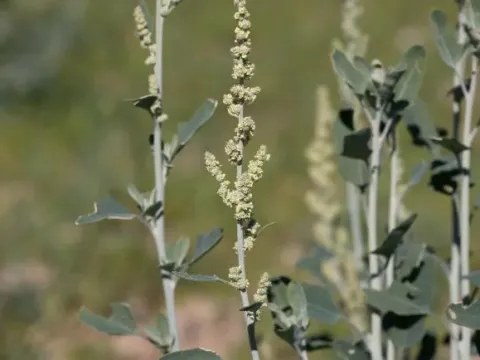
Golden goosefoot
Chenopodium auricomum
Golden goosefoot (Chenopodium auricomum) belongs to the Amaranthaceae family. As a crop, it requires a well-prepared seedbed and should be sown once the soil temperature is consistently above 10-12 degrees Celsius to ensure rapid and uniform germination.
What the section contains
Golden goosefoot
Sowing is typically performed using precision drills with row spacings ranging from 45 to 60 centimeters. This row arrangement facilitates mechanical weeding and ensures that individual plants have sufficient space to reach their full physiological potential.
The seeds are small and should be placed at a shallow depth of 1-2 centimeters. Achieving proper soil-to-seed contact is essential to facilitate moisture uptake during the initial stages of germination, which is critical in drier regions.
The ideal sowing window generally opens in mid-spring, depending on the specific climatic zone. Early planting takes advantage of spring soil moisture, which helps the crop establish a robust root system before the heat of summer.
Delaying the sowing period can significantly reduce the overall biomass and seed yields. Maintaining a strict schedule is a fundamental component of the agrotechnical management of this particular crop.
Golden goosefoot is known for its ecological plasticity and ability to thrive in a wide range of soil types, including saline and nutrient-poor soils. It performs best, however, in well-drained, fertile loams with a neutral pH.
The plant demonstrates excellent drought tolerance once established, making it a viable option for semi-arid environments. It is capable of enduring temporary dry spells without significant wilting or yield reduction.
Sufficient solar radiation is necessary for optimal development. Shade can lead to leggy, weak stems and lower seed productivity, so selecting open, sunny sites is a priority for agricultural producers.
Balanced fertilization is beneficial, particularly during the early vegetative stage. However, excessive nitrogen application must be avoided, as it can cause lodging and interfere with the natural maturation process of the plant.
Proper water management is required, especially during the seedling stage. While it withstands some drought, irrigation during critical developmental phases significantly improves the crop's final performance.
The crop's yield potential makes it an attractive candidate for forage production. It provides a nutritious source of biomass, which is rich in proteins and minerals, suitable for various livestock feeding programs.
Seed production is a key economic factor for this crop. Yields are heavily dependent on plant density and the efficiency of the pollination process, which is naturally driven by wind across the field surface.
For forage purposes, harvesting should be timed precisely before the stalks become too fibrous. This ensures the harvest contains the highest possible concentration of nutrients for the animals being fed.
Reliable production statistics indicate that with proper management, the crop is capable of delivering consistent yields across varying climatic conditions. It serves as a dependable buffer in diverse agricultural systems.
Managing the plant density is essential to ensure that individual plants have access to nutrients, which maximizes both the quality and quantity of the harvest. Overcrowded fields often result in smaller seeds and overall yield degradation.
Like many members of the Amaranthaceae family, golden goosefoot can be affected by specific pests such as leaf miners and various aphid species. Scouting the fields frequently is essential to identify infestations before they become critical.
Fungal diseases, including downy mildew and powdery mildew, can pose a risk under conditions of high humidity or poor field aeration. Crop rotation is highly recommended to break the life cycles of these pathogens.
Weed management during the early growth stages is vital because the seedlings are relatively slow to establish their canopy. Mechanical inter-row cultivation is the most common approach to keep fields clean.
Damage to the stems or roots by physical factors or pests can open pathways for secondary bacterial infections. Maintaining plant vigor through good management practices is the first line of defense against these diseases.
Integrated Pest Management (IPM) strategies, which combine biological, mechanical, and controlled chemical measures, are most effective in maintaining a healthy crop throughout its long vegetative cycle.
Forage harvesting is performed by cutting the biomass during the flowering stage. The material should be processed quickly, either through drying for hay or ensiling, to preserve its high nutritional value for livestock.
Seed harvest is conducted when the plants reach full physiological maturity, indicated by the drying of the foliage and the hardening of the seeds. Specialized combines are necessary to handle the small seeds effectively.
Harvesting should ideally occur during dry, calm weather to minimize the risk of seed shattering, which is a common challenge with this crop. Proper equipment settings are crucial to prevent seed damage during threshing.
Post-harvest processing involves cleaning the seed to remove chaff and other impurities. High-quality, cleaned seed has a significantly longer shelf life and better germination rates for future planting seasons.
Storing the harvest requires cool, dry, and well-ventilated conditions. Protecting the product from moisture and pests during storage is the final step in ensuring that the crop remains profitable and viable.