
Girgensohnia
Girgensohnia
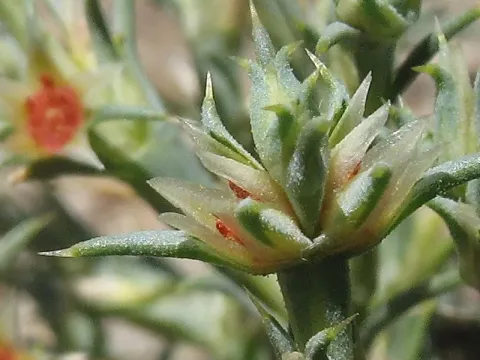
Girgensohnia is a genus of subshrubs belonging to the Amaranthaceae family. These plants are well-adapted to arid and semi-arid environments, thriving in habitats where salinity and drought prevent the growth of most conventional crops.
What the section contains

Girgensohnia
The genus originates from the desert regions of Central Asia. Its natural range is characterized by harsh climatic conditions, including extreme temperature fluctuations and limited annual precipitation, which define its survival strategy.
Botanically, Girgensohnia displays significant adaptations, such as reduced leaves and specialized tissue structures that allow it to manage water loss effectively. The root system is deep and expansive, designed to extract moisture from arid, saline-rich soil profiles.
Cultivation requirements involve full sun exposure and well-drained, sandy or gravelly soils. The plant does not tolerate high humidity or waterlogged conditions, as these factors typically trigger root decay and weaken the plant's natural defenses.
Regarding its utility, Girgensohnia is mainly recognized for its potential in soil stabilization and phytoremediation projects in desertified areas. It helps bind loose soil particles and provides essential cover in degraded ecosystems where biodiversity is low.
The main threats to the health of these plants include changes in salinity levels and groundwater depth. While tolerant to salt, sudden shifts in the chemical composition of the substrate can hinder growth.
Pests such as specialized sap-sucking insects may occasionally affect young shoots. Overgrazing remains a critical threat, as it reduces the plant's ability to store energy for the next growing season, eventually leading to population decline.