
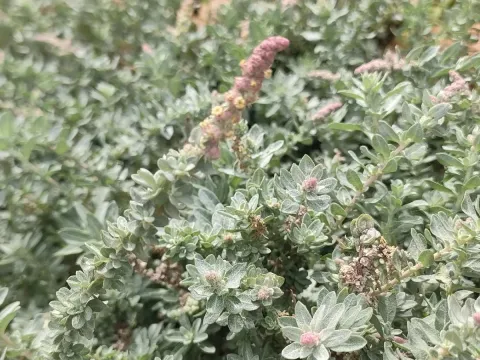
Glaucous saltbush
Atriplex glauca
Glaucous saltbush (Atriplex glauca) belongs to the Amaranthaceae family and is a specialized halophyte adapted to extremely harsh environments.
What the section contains
Glaucous saltbush
Native to the Mediterranean and North Africa, this species has developed a high tolerance to saline soils and arid climatic conditions.
The plant thrives in well-drained sandy or loamy soils, areas where standard agricultural crops often fail due to high salt concentrations.
It requires significant solar exposure and is highly sensitive to frost, necessitating careful site selection for commercial cultivation.
The root system is capable of extracting moisture efficiently, allowing the plant to remain green even during prolonged dry spells.
Sowing should take place in early spring once the soil temperature is consistently above 15 degrees Celsius to ensure rapid germination.
Seeds are typically sown at a shallow depth of 1–2 centimeters, which is optimal for early emergence in light soil types.
Row spacing should be calibrated based on the intended use, whether for mass biomass production or for soil reclamation purposes.
Proper field preparation, including the leveling of the seedbed, is crucial for maintaining consistent plant density across the area.
Applying light irrigation immediately after sowing can help ensure uniform establishment, especially in drier environments.
The primary use of glaucous saltbush is as a high-protein forage crop for livestock in regions where traditional grasses cannot survive.
Its ability to yield biomass under conditions of high salinity makes it an economically viable option for degraded agricultural lands.
Total yield per hectare depends on soil fertility, water availability, and the frequency of grazing or harvesting management practices.
Studies show that its nutritional composition remains high even when plants are grown in moderately saline water conditions.
Proper management of harvest intervals is essential to maximize annual yield and ensure the longevity of the plant stand.
Fungal pathogens are the main threat to plant health, particularly when the crop is exposed to excessive soil moisture or stagnant water.
Insect pests, such as various species of caterpillars, can cause significant damage to the foliage, which reduces both quality and yield.
Integrated pest management, including crop rotation and regular monitoring, is the most effective approach for maintaining healthy fields.
Chemical control measures should be applied judiciously, as the crop is intended for animal consumption and chemical residues must be avoided.
Early detection of damage allows for targeted intervention, which is much more effective than large-scale applications of pesticides.
Harvesting is performed mechanically during the budding phase to ensure the highest concentration of essential nutrients in the biomass.
It is critical to transport the harvested material promptly to processing or drying facilities to prevent nutritional degradation.
Drying is a key post-harvest step to achieve a stable moisture content, which prevents mold and spoilage during storage.
Efficient harvesting techniques help preserve the crown of the plant, allowing it to recover and produce secondary growth throughout the season.
By optimizing the timing of the cut, producers can balance the need for biomass volume with the desired quality parameters of the fodder.