
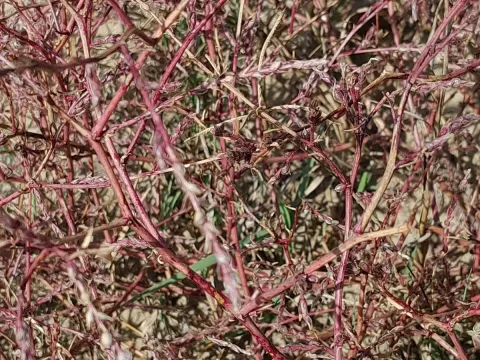
Glossy bugseed
Corispermum nitidum
Glossy bugseed, scientifically known as Corispermum nitidum, is an annual herbaceous plant belonging to the Amaranthaceae family. It is recognized for its exceptional adaptability to sandy and nutrient-poor environments, making it a subject of interest for sustainable agriculture.
What the section contains
Glossy bugseed
The sowing process begins in early spring once the soil temperatures stabilize above 10 degrees Celsius. Due to the small size of the seeds, precision sowing is necessary to ensure optimal germination rates and uniform plant distribution across the field.
A key biological feature of this species is its rapid seedling establishment, which allows the plant to secure itself in sandy substrates before seasonal drying occurs. This trait is essential for minimizing erosion in arid cultivation areas.
In practice, wide-row planting is recommended to allow for adequate airflow and weed control. As the plants mature, they form a dense canopy that helps suppress competing vegetation, provided that initial weed management is successful.
The growth cycle is relatively short, allowing for flexible harvest scheduling. Growers should monitor the moisture content of the seeds if harvesting for reproduction purposes, ensuring maturity before the autumn frost begins.
This crop thrives in sandy, loose, and well-drained soils. It shows a remarkable resistance to saline conditions, which allows it to be cultivated on lands that are typically unsuitable for traditional cereal crops.
Sunlight is the primary requirement for the healthy development of glossy bugseed. The plant is photophilic and does not tolerate competition from taller vegetation or shaded areas, which significantly stunts its growth.
Water requirements are relatively low compared to conventional forage crops. While the plant can withstand severe drought, supplemental irrigation during the rapid growth phase can significantly increase the total biomass yield per hectare.
Temperature tolerance is a defining characteristic of the species. It excels in hot, arid climates where metabolic processes are optimized at high temperatures, allowing it to produce energy even when other plants enter dormancy.
Soil nutrient requirements are modest, and the plant often performs well even with minimal fertilization. Over-fertilization, particularly with nitrogen, can negatively impact the plant's structural integrity, making it susceptible to lodging.
The most common threats to field production include orthopteran insects, which may consume succulent foliage during periods of drought. Usually, the plant's rapid recovery rate allows it to survive these outbreaks without the need for chemical intervention.
Pathogen risks are generally low; however, root rot may occur if the soil remains waterlogged for extended periods. Maintaining proper drainage and selecting well-aerated soil sites effectively prevents these issues.
Weed management remains critical during the first four to six weeks of the growth phase. Without proper mechanical weeding or row cultivation, weeds can easily outcompete the young seedlings for light and water.
Fungal diseases are rarely an issue in properly managed fields. Producers should focus on maintaining adequate space between plants to ensure the foliage dries quickly after rainfall, reducing humidity around the stems.
Integrated pest management strategies are recommended to keep fields healthy. By encouraging natural biodiversity on the periphery of the fields, growers can maintain a balanced ecosystem that limits the damage from common field pests.