
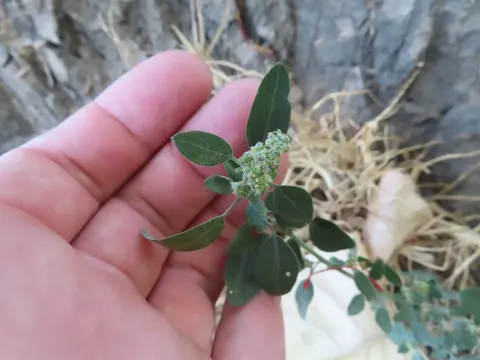
Stinking goosefoot
Chenopodium vulvaria
Stinking goosefoot (Chenopodium vulvaria) is a distinct herbaceous annual belonging to the Amaranthaceae family. It is widely recognized for its characteristic, pungent odor, which is often described as resembling rotten fish due to the accumulation of trimethylamine in its glandular hairs.
What the section contains
Stinking goosefoot
The plant typically grows in disturbed habitats, including fields, roadsides, and waste grounds. It thrives in nitrogen-rich, well-drained soils and shows a clear preference for sunny environments where competition from taller vegetation is relatively low.
Biologically, the plant features a spreading, procumbent habit with greyish-green leaves covered in a mealy, farinose indumentum. This powder-like coating plays a crucial role in water retention, allowing the plant to survive in semi-arid conditions across its native Eurasian range.
Regarding climatic needs, Chenopodium vulvaria requires a steady transition into the growing season with soil temperatures consistently above 10 degrees Celsius for germination. It is remarkably resilient to heat but sensitive to severe soil waterlogging, which often leads to root rot.
In terms of agricultural utility, while not cultivated as a primary food crop, it has a history of traditional ethnobotanical use. However, modern farmers generally manage it as a weed that competes with vegetable crops for nutrients and sunlight during the critical stages of early development.
The most common threats to Chenopodium vulvaria include fungal pathogens such as downy mildew, which flourish under conditions of high humidity and poor air circulation. These infections can drastically reduce the photosynthetic capacity of the plant.
Pests, particularly various aphid species and leaf-feeding beetles, target the succulent parts of the plant. Their feeding activity can stunt growth and introduce viral pathogens, making the weed a potential reservoir for diseases that could spread to cultivated crops.
Agronomic management often involves cultural control methods such as crop rotation and inter-row cultivation. Removing the plants before they reach the flowering stage is essential to prevent seed dispersal and the buildup of the seed bank in the soil.
Chemical control, when necessary, involves selective herbicides that are registered for use in the specific crop being infested. Due to the plant's waxy leaf coating, efficacy of foliar-applied herbicides can be improved with the use of appropriate surfactants.
Effective management strategies require a proactive approach, combining mechanical removal and monitoring of field margins. Maintaining clean field boundaries is one of the most efficient ways to prevent the spread of stinking goosefoot into the main production areas.