
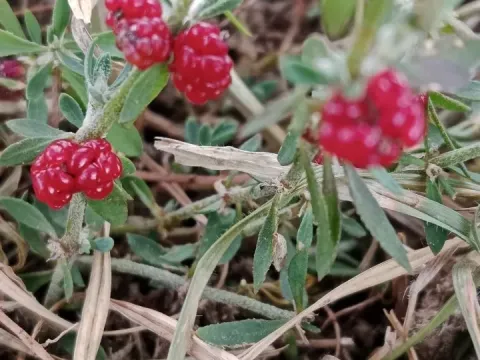
Strawberry blite
Blitum
Strawberry blite (Blitum virgatum) is typically sown in early spring as soon as the soil is workable. The seeds are small and should be sown at a shallow depth of approximately 0.5 cm.
What the section contains


Strawberry blite
For an earlier harvest, seeds can be started indoors in trays about 4 to 6 weeks before the last expected frost date. The plant adapts well to transplanting if handled carefully.
Spacing is essential for this plant, as it develops a spreading habit. A distance of 30 to 45 cm between individual plants ensures proper air circulation and growth.
As a member of the Amaranthaceae family, the plant is relatively hardy. It can be direct-sown in rows, allowing the gardener to thin out the seedlings as they mature.
Self-seeding is a common characteristic of Blitum virgatum; therefore, keeping records of its location is helpful for managing garden beds in the following seasons.
This crop thrives in well-drained, fertile soil with a slightly alkaline to neutral pH. It performs best in full sun, though it can tolerate partial shade in warmer climates.
While the plant is frost-tolerant, it requires consistent moisture for optimal leaf development. Drought stress often triggers premature flowering and reduces the quality of the greens.
The soil should be rich in organic matter. Incorporating compost before planting provides the necessary nitrogen for vegetative growth and ensures high-quality foliage.
Avoid planting in waterlogged areas, as the root system is sensitive to poor drainage and may develop rot under such conditions.
Regular weeding is necessary during the early stages of growth, as the plant can be easily overwhelmed by faster-growing garden weeds.
The yield of strawberry blite includes both the nutritious leaves and the ornamental, edible berry-like clusters that develop along the stems.
The leaves are ready for harvest within a few weeks of germination. Consistent trimming of the outer leaves encourages the plant to continue producing fresh greens.
The bright red, succulent fruits reach maturity in mid-to-late summer. While they are visually appealing, they offer a mild, subtle flavor that complements fruit salads or desserts.
With proper care and adequate nutrition, a single plant can provide a steady supply of both salad greens and fruits throughout the growing season.
Individual plant yield is maximized by harvesting fruits as soon as they reach their peak color, which encourages the production of secondary fruit clusters.
Aphids are the most common pests affecting this species. They typically cluster on the undersides of the leaves or around the fruit stalks, weakening the plant.
Powdery mildew may occur in damp, crowded environments with poor airflow. Maintaining proper spacing between plants is the most effective cultural control method.
Leaf miners can cause unsightly tunnels in the foliage, reducing the marketable quality of the greens. Removing heavily infested leaves is recommended.
Root-knot nematodes can pose a risk in certain soils. Crop rotation is essential to prevent the accumulation of these soil-borne pests in the planting area.
Due to the short cycle between harvest and consumption, organic pest management solutions are preferred over synthetic chemical treatments.
Leaves should be harvested starting from the base of the plant once they have reached a usable size, ensuring the apical bud remains intact for continuous growth.
The berries are extremely fragile when ripe. Harvesting should be done carefully by hand, preferably during the cooler parts of the day to maintain quality.
Post-harvest shelf life is limited, as the fruits tend to soften quickly. They should ideally be consumed or processed on the same day they are harvested.
The foliage can be used fresh in culinary applications, similar to spinach. If necessary, excess leaves can be blanched and frozen for later use in cooking.
The harvest period extends until the first hard autumn frost, after which the plant’s productivity declines as it approaches the end of its life cycle.