
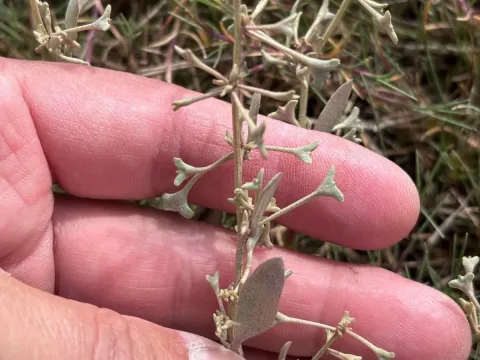
Pedunculate saltbush
Atriplex pedunculata
Pedunculate saltbush (Atriplex pedunculata) belongs to the Amaranthaceae family and is recognized as a significant halophyte. It has evolved unique biological mechanisms to survive and thrive in soils with extreme saline conditions.
What the section contains
Pedunculate saltbush
The plant originates from coastal salt marshes and inland saline depressions. It occupies environments that are hostile to conventional crops, effectively utilizing salt-rich substrates for its growth and physiological development.
Climatic requirements involve high light exposure and adaptation to arid environments. The plant is highly efficient in water regulation, allowing it to maintain metabolic activity even during prolonged drought periods common in its habitat.
In agricultural practice, cultivation techniques focus on maintaining soil structure rather than traditional fertilization. The plant thrives in alkaline soils where sodium chloride levels would inhibit the germination of most commercial cultivars.
The primary economic use of this species includes soil reclamation efforts and its potential as a secondary fodder source in regions where traditional agriculture is limited by soil salinity.
Pest pressure is relatively low due to the high mineral concentration within the plant tissues, which acts as a deterrent for many generalist insects. However, specific leaf-feeding beetles can cause localized damage.
Fungal pathogens are not typically a major issue due to the plant's saline chemistry. Occasionally, high humidity may lead to stem rot, necessitating better air circulation and moisture management in the field.
Soil-borne nematodes may pose a threat in poorly drained cultivation zones. Ensuring proper soil aeration is the most effective preventative measure to maintain root health and vigor.
Competition from weeds is significant only during the establishment phase. Farmers should prioritize early season weeding to allow the plant to develop its taproot system without suppression.
Environmental threats involve sudden changes in salinity levels, which can cause osmotic shock. Maintaining a consistent mineral profile in the soil is critical for stable crop yield and health.