
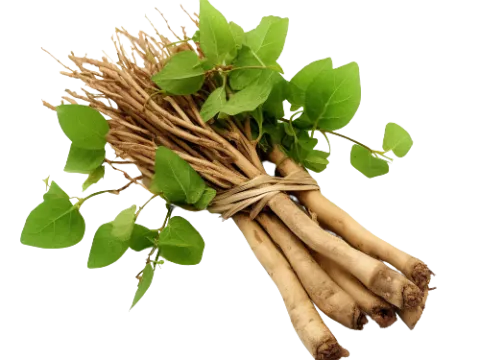
Pfaffia
Pfaffia
Pfaffia (Pfaffia paniculata), also widely known as Brazilian ginseng, belongs to the Amaranthaceae family and is recognized for its medicinal root properties.
What the section contains


Pfaffia
Sowing typically begins in nurseries where controlled conditions help the small seeds germinate effectively before transplanting them to the field.
The optimal planting time corresponds with the arrival of warm weather, ensuring that soil temperatures remain consistently above 20 degrees Celsius.
Spacing is a crucial factor in the agricultural strategy, as adequate room between plants promotes vigorous root growth and prevents overcrowding.
Establishing the crop requires careful handling of the seedlings, as the young plants are susceptible to environmental stress during the initial transplant phase.
This crop thrives in tropical and subtropical regions where temperatures remain high and the growing season is long and frost-free.
Soil quality is paramount for Pfaffia; it requires well-draining, loose, and fertile soil to prevent root rot and support healthy biomass development.
Consistent moisture management is necessary, as the plant requires regular irrigation while being highly intolerant to waterlogging of the rhizosphere.
Ample sunlight exposure is essential for the accumulation of active phytochemicals within the root system, which dictates the quality of the raw material.
The plant prefers slightly acidic to neutral pH soil conditions, which should be monitored and adjusted through precise nutrient management practices.
The economic value of Pfaffia is primarily concentrated in its roots, which are harvested for use in the pharmaceutical and nutraceutical industries.
Yield capacity is significantly improved by using organic-rich fertilizers that enhance the soil structure and nutrient availability for long-term growth.
High-quality crops generally require a multi-year growth cycle, as the concentration of active ingredients increases notably in two-to-three-year-old roots.
Modern harvesting technologies are increasingly employed to ensure that the roots are extracted without mechanical damage, preserving the product's integrity.
Proper management of plant nutrition and irrigation can lead to high-quality yield benchmarks per hectare in commercial cultivation settings.
Fungal pathogens represent the most significant threat to Pfaffia, particularly those causing root rot, which is aggravated by excessive soil moisture.
Nematode infestations can severely compromise the root system, leading to stunted growth and a substantial reduction in overall commercial harvest quality.
Effective pest and disease control requires a combination of crop rotation, careful monitoring, and the use of certified, disease-free planting material.
Preventative cultural practices, such as maintaining optimal plant spacing and ensuring good airflow, are vital for reducing the risk of disease spread.
Biological control agents are often preferred over broad-spectrum pesticides to maintain the high quality required for medicinal applications.
Harvesting usually occurs at the end of the growth cycle when the above-ground biomass indicates that the roots have reached full maturity.
The process begins with mechanical extraction, followed by immediate cleaning to remove soil and prevent contamination or decay of the roots.
Drying must be conducted in controlled, low-temperature environments to preserve the heat-sensitive compounds that define the plant's medicinal value.
Once dried, the raw material is processed into specific sizes or powdered forms based on the requirements of the final commercial application.
Storage should be handled in climate-controlled facilities to ensure the product remains stable and free from moisture during transport and distribution.