
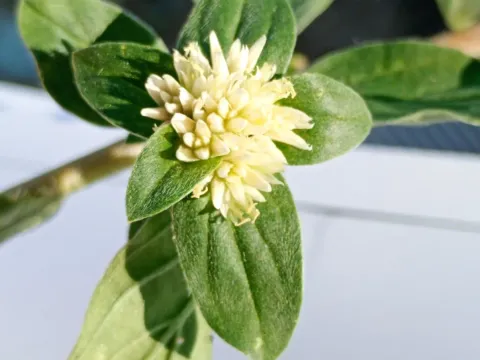
Philoxerus
Philoxerus
Philoxerus belongs to the Amaranthaceae family. It is a perennial herbaceous plant widely distributed throughout the coastal regions of the Americas and Pacific islands.
What the section contains

Philoxerus
Botanically, this plant is categorized as a succulent perennial, highly adapted to sandy environments. Its growth habit is typically prostrate or creeping, making it an excellent ground cover.
The crop thrives in well-drained, sandy, or rocky soils. Philoxerus is uniquely characterized by its high salt tolerance, allowing it to colonize saline habitats near the sea.
This plant is a sun-loving species that requires full solar exposure to maintain its vigor and structure. It thrives in warm climates with temperatures ranging between 20 to 30 degrees Celsius.
It has moderate water requirements. While it originates from coastal zones, it does not tolerate waterlogging; therefore, maintaining excellent soil drainage is a critical component of its cultivation.
The primary pests affecting Philoxerus include mealybugs and spider mites. These sucking insects often thrive in protected environments where air circulation is poor.
Root rot is the most common disease associated with the plant. It is primarily caused by excessive moisture levels or inadequate drainage in the growing medium.
Regular monitoring of the foliage and stem bases is recommended to detect pest infestations early. Immediate isolation of affected plants can prevent the spread of parasites.
Disease management focuses on preventive measures, such as providing sufficient space between plants and ensuring that the soil surface dries out between irrigation cycles.
If chemical intervention is necessary, growers should select appropriate acaricides or systemic insecticides, adhering strictly to the recommended application rates to avoid plant toxicity.