
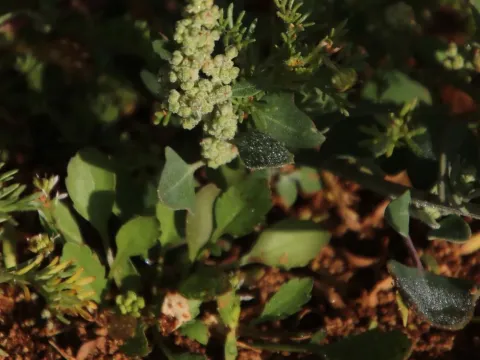
Phillips' goosefoot
Chenopodium phillipsianum
Phillips' goosefoot (lat. Chenopodium phillipsianum) is an herbaceous plant belonging to the Amaranthaceae family. Originating from Australia, this species is adapted to specific temperate and semi-arid environments, where it functions as a component of local plant communities.
What the section contains
Phillips' goosefoot
The crop thrives in well-lit conditions and requires soils with good drainage properties. It is moderately tolerant to varied soil types, though it prefers environments that mimic its native habitat, specifically light-textured soils that allow for efficient root penetration and prevent waterlogging during the growing season.
Botanically, the plant exhibits a typical Chenopodium structure, featuring an upright stem and alternate leaves. The inflorescence consists of small, clustered flowers. Its physiological traits allow it to withstand thermal stress better than many common garden vegetables, making it a subject of interest for climate-resilient crop research.
In terms of agricultural utility, Phillips' goosefoot is primarily regarded as a niche botanical resource. The seeds of the genus Chenopodium are known for their nutritional profile, and while this specific species is not widely farmed, it holds potential as an alternative protein source or forage crop in specific regional agricultural systems.
Cultivation practices rely on standard nursery or direct sowing techniques suitable for related species. Successful production involves managing inter-row spacing to minimize competition and ensuring that soil moisture levels are consistent until the plant reaches the establishment phase. Weed management is critical due to the plant's relatively slow early growth rate.