
Polycnemum
Polycnemum
The genus Polycnemum belongs to the Amaranthaceae family and comprises small, annual herbaceous plants commonly known for their adaptability to harsh environments.
What the section contains


Polycnemum
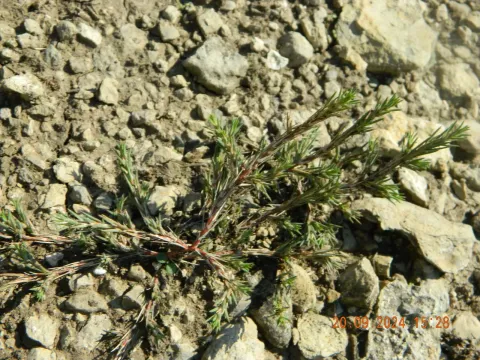
These plants are typically found in arid, sandy, or stony habitats, demonstrating high ecological plasticity that allows them to thrive in marginal agricultural lands.
Botanically, Polycnemum species are characterized by their subulate leaves and branched, often prostrate stems, which help them survive in conditions with low water availability.
They require high light intensity and are rarely found in shaded areas, making them prolific in open, cultivated fields where they compete with crops for sunlight and soil nutrients.
The root system of the plant is well-developed relative to its aerial part, enabling it to efficiently extract water and trace elements from impoverished, compacted soils.
In agricultural settings, Polycnemum is primarily viewed as a weed that significantly reduces crop yields by competing for vital resources such as nitrogen and moisture.
Effective management requires consistent mechanical tillage practices to disrupt the plant's life cycle before seed dispersal occurs in late summer or autumn.
Chemical control is often necessary in heavily infested fields, utilizing herbicides that are registered for the protection of specific crops against broadleaf weeds.
The plant may harbor pests or pathogens that affect other Amaranthaceae crops, necessitating crop rotation strategies that include non-host species to break the disease cycle.
Monitoring field edges and disturbed soils is crucial, as Polycnemum often establishes initial populations in these zones before migrating into the main production areas.