
Nanophyton
Nanophyton
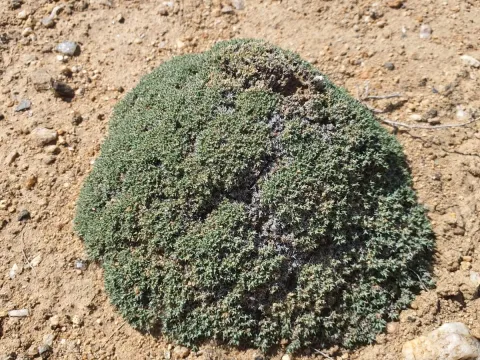
Nanophyton is a genus of subshrubs belonging to the Amaranthaceae family, subfamily Chenopodioideae. These plants are uniquely adapted to the harsh conditions of desert and semi-desert environments found across Central Asia.
What the section contains

Nanophyton
As a specialized halophyte, Nanophyton thrives in highly saline soils, including solonchaks and hard-packed clay deserts. Its ability to tolerate high concentrations of minerals in the soil makes it a crucial species for colonizing challenging terrain.
The plant exhibits a xeromorphic structure, featuring reduced, scale-like leaves and lignified stems to minimize water loss through transpiration. This structural adaptation is essential for surviving in areas with extremely low annual rainfall.
Nanophyton utilizes a deep, robust root system to access moisture stored in lower soil layers. This survival strategy ensures the plant remains active during scorching summers, while its slow growth rate is compensated by its extreme longevity.
From an ecological perspective, Nanophyton acts as a significant soil stabilizer, preventing wind erosion in desert regions. It also serves as a vital forage source for camels and desert-adapted sheep, making it an important component of regional pastoralism.
The primary threat to Nanophyton populations is overgrazing by livestock. Because the plant has a slow regeneration rate, intensive grazing pressure can lead to the permanent loss of plant cover and subsequent desertification of the area.
While the plant's high salt content acts as a deterrent for many herbivores, it remains susceptible to specific insects that have evolved to consume halophytic vegetation. However, significant outbreaks are rare due to the isolated nature of its habitat.
Anthropogenic activities, such as mining and heavy machinery use, pose a severe threat by compacting the soil and destroying the intricate root systems that keep the desert surface intact. The slow recovery cycle makes such damage largely irreversible.
Climate change, manifesting as erratic precipitation patterns, can interfere with the seed germination process. As a highly specialized plant, Nanophyton is sensitive to sudden changes in its environmental equilibrium, which can affect its overall health.
Conservation strategies focusing on controlled grazing and protected area management are essential. Maintaining the integrity of Nanophyton communities is vital for protecting arid ecosystems and ensuring the long-term stability of desert soil surfaces.