
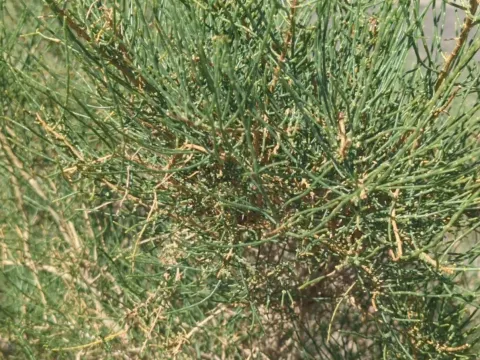
Saxaul
Haloxylon
Saxaul (Haloxylon) belongs to the Amaranthaceae family and is a critical species for arid land restoration. Sowing is typically carried out in late autumn or early winter, allowing seeds to experience natural stratification before germination.
What the section contains


Saxaul
The seeds are broadcasted over prepared soil or sown into furrows that help retain moisture and protect the delicate seedlings from wind erosion. Minimal soil coverage is preferred due to the small size of the seeds.
Successful germination requires specific moisture levels in the topsoil during the brief spring window. In nursery settings, seeds are planted in specialized containers to ensure high survival rates before transplantation.
Effective establishment of a saxaul stand depends heavily on protecting the area from livestock grazing during the first two to three years of growth, allowing the root systems to anchor deep into the substrate.
In large-scale restoration projects, aerial seeding methods are sometimes employed, although this requires careful timing with seasonal weather patterns to optimize the germination potential.
Saxaul is an extreme xerophyte and halophyte, thriving in environments where other vegetation fails. It is highly resistant to saline soils and can tolerate high concentrations of minerals.
This species requires full, unobstructed sunlight for optimal growth. It is exceptionally well-adapted to the harsh temperature fluctuations of desert climates, surviving extreme summer heat and cold winter frosts.
The root system is the plant's most vital feature, extending deep into the ground to tap into deep-seated groundwater, which allows it to survive prolonged droughts without significant stress.
Soil management for saxaul cultivation focuses on preventing soil deflation. By planting in rows or grids, the trees act as windbreaks, trapping shifting sands and building up soil structure over time.
The plant does not require high levels of soil fertility, as it is adapted to nutrient-poor, sandy, and alkaline conditions typical of its native desert habitats.
While saxaul is not a traditional harvest crop, its "yield" is measured in ecological service and biomass production. It serves as a vital component in preventing desertification and managing sand dunes.
The wood of the saxaul is exceptionally dense and heavy, known for its high caloric value, making it a traditional but strictly regulated fuel source. It is also used to produce high-quality activated charcoal.
In pastoralist economies, saxaul provides an essential winter fodder source for camels, which graze on its green succulent branches when other forage is unavailable.
Sustainable harvesting involves the collection of seeds from mature stands to support future reforestation efforts. Seed viability is a key metric for determining the success of these programs.
Well-maintained stands of saxaul can persist for decades, continuously capturing carbon and stabilizing the soil, thereby increasing the overall environmental productivity of arid regions.
Pest populations, including various species of xylophagous insects, can damage the trunks and limbs of the trees. Significant infestations can weaken the structural integrity of a stand.
Fungal diseases may manifest under high humidity or following physical damage to the plant, potentially leading to localized decay or reduced growth rates.
Human activities, particularly illegal logging and overgrazing, represent the most significant threat to saxaul forests. Once destroyed, these ecosystems take an incredibly long time to recover naturally.
Parasitic plants, such as Cistanche, can exploit the root systems of saxaul, extracting nutrients and water from the host plant, which can hinder the growth of younger specimens.
Monitoring and site management are essential to mitigating these threats. Because these plants grow in vast, remote areas, integrated pest management is often limited to preventive measures and strict land-use regulations.