
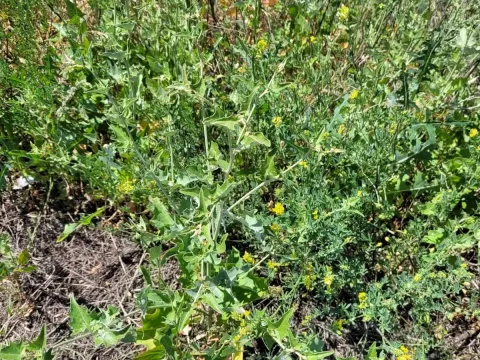
Atriplex aucheri
Atriplex aucheri
Atriplex aucheri is an annual herbaceous plant belonging to the Amaranthaceae family. Its life cycle begins in early spring when environmental conditions, particularly soil temperature, trigger the germination of seeds dormant in the ground.
What the section contains
Atriplex aucheri
The plant demonstrates high adaptability in its germination phase, effectively utilizing early season soil moisture. Seed dormancy levels vary, ensuring that not all seeds germinate at once, which increases the survival rate of the population.
Agricultural cultivation, if practiced, requires shallow seeding depth. Usually, placing seeds at a depth of 1-2 centimeters ensures consistent and uniform emergence across the field plot.
The species is well-suited for long-day photoperiods, which stimulate rapid vegetative development. Within weeks of germination, the plant builds a robust root system and a significant above-ground structure.
Timing is crucial; late spring sowing might be less effective due to the heat stress that can inhibit early growth in sensitive young seedlings. Therefore, the early window is preferred for establishing a strong stand.
As a notable halophyte, Atriplex aucheri is exceptionally well-adapted to saline and alkaline soils. It occupies ecological niches where soil salinity levels exceed the tolerance limit of most crop plants.
The species requires full solar exposure for optimal photosynthesis and growth. Any degree of shade significantly hinders its development, leading to spindly growth and reduced overall biomass production.
The plant is highly drought-tolerant, utilizing a deep taproot to access water from lower soil profiles. This resilience makes it a dominant species in arid and semi-arid landscapes across its natural range.
Soil texture preferences include light and aerated soils, although the plant shows extreme flexibility in adapting to heavy clay or compacted grounds. Good drainage is key to maintaining a healthy root system.
Climatic requirements involve moderate to warm temperatures throughout the growing season. The plant exhibits high tolerance to daily temperature fluctuations, characteristic of desert and steppe ecosystems.
Atriplex aucheri is highly productive in terms of biomass, especially when nutrients are available in the substrate. Its ability to regrow after minor mechanical damage enhances its overall endurance.
The reproductive strategy of the species relies on producing a massive quantity of seeds. This high output ensures the persistence of the species in competitive environments where resources may be scarce.
Harvesting for biomass requires careful timing, ideally before the plant transitions into the seed-setting phase. This ensures that the nutrient quality of the harvested parts remains high for various uses.
In cultivation, yield can be significantly boosted through controlled irrigation and nitrogen fertilization. However, excessive water management should be avoided to prevent structural decline or decay.
Post-harvest handling is critical due to the plant's chemistry. Proper drying techniques are necessary to prevent fungal spoilage and to maintain the integrity of the collected material for storage or usage.
The primary threats to Atriplex aucheri include various fungal infections, particularly powdery mildew, which thrive in humid conditions. Such infections can drastically reduce the photosynthetic capacity of the leaves.
Insect pests, such as aphids and leaf-eating beetles, are common antagonists. These pests can cause localized tissue damage, weakening the plant's overall vigor and making it susceptible to secondary stressors.
Root rots pose a significant threat during periods of extreme waterlogging. Since the plant is adapted to arid conditions, anaerobic soil environments are toxic to its specialized root structure.
In agricultural settings, Atriplex aucheri can serve as a reservoir for viruses that potentially spread to adjacent crops. Integrated management strategies, including crop rotation and field sanitation, are essential.
Chemical control can be challenging due to the plant's inherent resistance to many standard herbicides. Consequently, mechanical cultivation and physical removal remain the most reliable methods for population control.