
Arthroceras
Arthroceras
Arthroceras is a genus of flowering plants belonging to the Amaranthaceae family, known for its remarkable ability to thrive in highly saline environments. These plants are true halophytes, adapted to withstand osmotic stress that would be fatal to most conventional agricultural crops.
What the section contains

Arthroceras
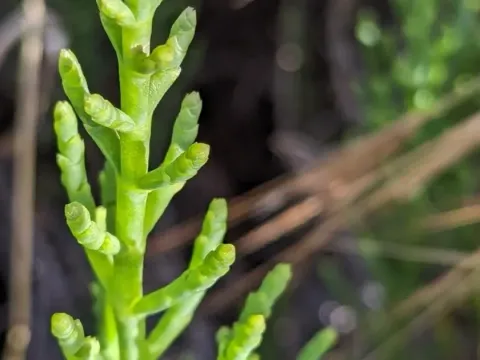
The morphology of Arthroceras is characterized by succulent, jointed stems that store moisture and regulate internal salt concentrations. These adaptations allow the plant to maintain physiological processes even when growing on salt flats or in coastal areas with high salinity.
Environmental requirements for Arthroceras include high levels of solar irradiance and well-drained, saline soils. The plant performs best in arid and semi-arid climates, where intense light facilitates active growth cycles during the warmer months.
Soil texture is less critical than the chemical composition of the substrate. Sandy, loamy, and even silty soils can support Arthroceras, provided there is adequate drainage to prevent waterlogging, which the plant does not tolerate.
The plant demonstrates high resilience to extreme temperature fluctuations, common in desert and steppe environments. It is an ideal candidate for regions where water resources are saline or brackish and cannot be used for traditional field irrigation.
Sowing occurs during late spring, once the danger of late frost has passed and soil temperatures consistently reach the 15–20 degrees Celsius threshold necessary for uniform germination.
Seeds of Arthroceras are very small, requiring shallow placement at a depth of no more than 1 to 2 centimeters. Ensuring good soil-to-seed contact via light rolling is essential for consistent emergence in dry soil conditions.
Row cropping is the preferred method for commercial cultivation, allowing for easier mechanical maintenance and harvesting. Spacing should be determined based on the target density and the expected biomass production per hectare.
During the establishment phase, which lasts for the first two to three weeks, minimal irrigation might be necessary if natural precipitation is insufficient. Once the root system is well-established, the plants become largely self-sufficient.
Preventing competition from weeds during the early vegetative stage is crucial. Since Arthroceras grows slowly initially, timely manual or mechanical weeding is recommended to ensure the crop establishes dominance.
The primary use of Arthroceras is as a fodder crop in regions where standard pastures cannot be established due to extreme soil salinity. Its biomass provides a critical nutritional source for livestock in harsh conditions.
Yield potential is directly proportional to the fertility of the saline soil and the availability of supplemental water. Under optimized management, Arthroceras can produce substantial green matter yields that would otherwise be impossible on such marginal lands.
Beyond its value as animal feed, Arthroceras serves as a bio-remediator. It extracts minerals and salts from the soil, effectively reducing salinity levels over multiple growing seasons, thereby improving soil quality for future rotational crops.
Research into the pharmaceutical and industrial applications of Arthroceras is ongoing. The presence of secondary metabolites within its tissues suggests potential for extracting valuable compounds used in specialized chemical industries.
Harvesting for biomass should be timed before the onset of flowering to maximize nutritional quality. Once the plant enters the reproductive stage, the fiber content increases, which may reduce its overall digestibility for livestock.
Arthroceras benefits from a natural resistance to many common agricultural diseases. The high salt concentration in its tissues serves as a natural deterrent against many pathogenic fungi and bacteria.
Pests are generally not a major concern for this crop. However, during periods of high humidity, some leaf-eating insects may appear, though they rarely reach population densities sufficient to cause significant economic damage.
Root rot remains a risk only if the soil remains waterlogged for extended periods. Proper site selection and ensuring excellent drainage are the most effective preventive measures against subterranean pathogens.
Viral infections transmitted by aphid vectors can occasionally occur, though these are typically localized. Routine monitoring of the foliage for discoloration or deformation is recommended as part of standard field management.
Overall, Arthroceras represents a low-maintenance, high-resilience crop choice that requires minimal chemical intervention compared to conventional cultivars, making it a sustainable option for saline agricultural landscapes.