
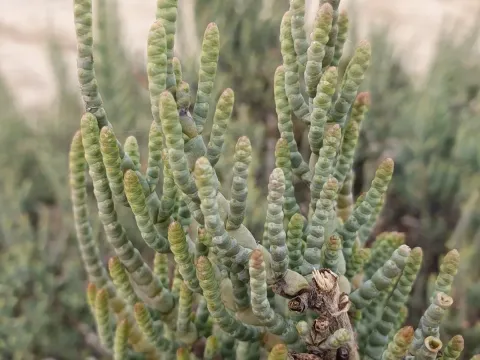
Arthrocaulon
Arthrocaulon
Sowing of Arthrocaulon typically occurs during the rainy season when natural leaching reduces soil salinity levels, creating favorable conditions for seed germination.
What the section contains

Arthrocaulon
In cultivation, seeds are sown shallowly because they require light and direct contact with moist substrate to initiate the sprouting process effectively.
The optimal time for planting is early spring, which ensures that seedlings establish a strong root system before the onset of extreme summer temperatures.
Proper soil preparation involving light loosening is recommended to prevent waterlogging, which can be detrimental to the seeds of this halophyte.
Controlled sowing environments often use moisture-retaining covers until the emergence of the first pair of leaves to ensure uniform plant density across the field.
Arthrocaulon is a genus within the Amaranthaceae family, known for its extreme halophytic nature and ability to thrive in highly saline environments where other crops fail.
The plant requires soils with high concentrations of sodium salts, which are essential for its physiological processes and structural integrity.
Full sun exposure is vital for the plant, as it stimulates the production of specialized succulent tissues that store water and minerals.
While adapted to saline conditions, the plant responds well to intermittent irrigation with brackish or even seawater, which promotes rapid biomass accumulation.
Soil management should focus on maintaining adequate drainage, as the plant is sensitive to the root suffocation caused by stagnant water in saline environments.
The yield of Arthrocaulon is highly dependent on nitrogen availability and the specific salinity levels of the irrigation water used during the growing season.
When managed correctly, the plant provides consistent yields of succulent biomass that can be harvested multiple times within a single agricultural season.
The crop serves as a sustainable source of edible greens for both human consumption and high-value animal feed additives in saline-prone regions.
Yield stability is one of the primary advantages of this culture, as it remains productive under environmental stressors that would otherwise devastate conventional crops.
Future agricultural prospects involve selecting elite genotypes that exhibit higher leaf-to-stem ratios, significantly increasing the marketable harvest per hectare.
Arthrocaulon possesses a natural defense mechanism against many insects due to the high mineral salt content present in its succulent tissues.
Fungal diseases primarily emerge in conditions of poor ventilation and excessive humidity, which can lead to the soft rotting of the plant stem base.
Soil-borne pests may pose a threat to young, developing seedlings, making early stage monitoring essential for successful crop establishment.
Competition from more aggressive, non-halophytic weeds can stunt plant growth, requiring regular weeding in the early phases of the crop life cycle.
To mitigate potential risks, growers should maintain adequate spacing between plants to encourage airflow and reduce the likelihood of pathogen transmission.
Harvesting is performed by selectively cutting the young, succulent tips of the stems, which preserves the plant's potential for regrowth.
Timing the harvest is critical; it should occur before the plants begin to flower, as the nutritional and textural quality peaks during the vegetative phase.
Post-harvest handling must be done with extreme care to avoid bruising the tender tissues, which are susceptible to oxidation and rapid decay.
Storage requires cool, dry conditions, ideally in modified atmosphere packaging to extend the shelf life of the harvested succulent greens.
Effective harvest management involves rotating the cutting areas to ensure a continuous supply of fresh product throughout the active growing season.