
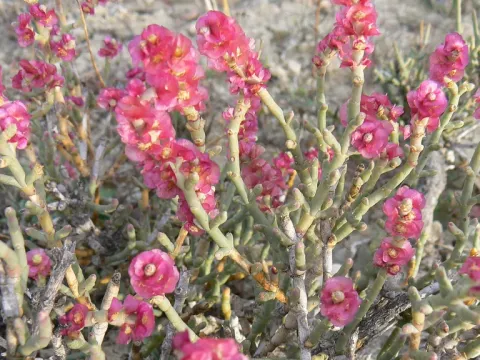
Anabasis
Anabasis
Anabasis is a genus of flowering plants in the family Amaranthaceae. These perennial subshrubs are classic xerophytes, naturally evolved to thrive in arid and semi-arid regions of Eurasia and North Africa.
What the section contains


Anabasis
The plant demonstrates unique physiological adaptations to extreme salinity. It effectively processes mineral salts, making it a valuable subject for research into soil remediation and sustainable use of saline lands.
The climate requirements for Anabasis include high temperatures and intense solar radiation. It requires very low precipitation levels and is highly sensitive to waterlogging, which can cause root rot and physiological stress.
Soil preferences lean towards light, alkaline, and well-drained substrates. In agricultural practice, it is essential to ensure that the site has excellent drainage to mimic the natural desert habitat.
Cultivation of Anabasis is primarily focused on its industrial value. The plant is a natural source of anabasine, an alkaloid with significant applications in medicine and as a bio-pesticide, making it a crop of interest for pharmaceutical farming.
Anabasis faces few major threats in its natural environment, but under intensive cultivation, several risks may emerge. Locust swarms are the primary insect threat, capable of defoliating entire fields rapidly.
Fungal diseases can occur in high-density plantings if environmental conditions become too humid. Maintaining proper plant spacing is essential to ensure adequate airflow and prevent the development of pathogens.
Root system pests, particularly various soil-dwelling insects and rodents, can damage young plants. Once the crop is established, it becomes much more resilient to these types of biological stressors.
Agricultural management should prioritize monitoring for localized pest outbreaks during the spring growth phase. Integrated pest management (IPM) is the most sustainable approach for this hardy species.
The chemical profile of the plant provides natural defense mechanisms against many common pests. Consequently, the reliance on synthetic chemicals for crop protection is generally unnecessary in well-managed Anabasis fields.