
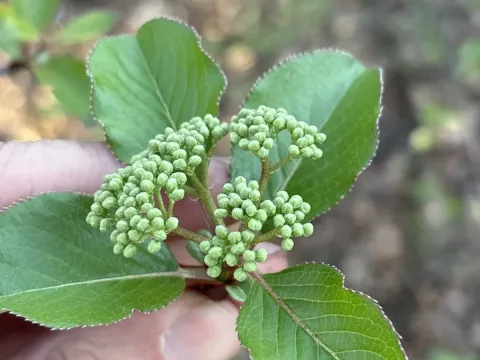
Rusty Blackhaw
Viburnum rufidulum
The Rusty Blackhaw (Viburnum rufidulum) is a sturdy species belonging to the Adoxaceae family, native to the southern and central regions of the United States.
What the section contains
Rusty Blackhaw
This shrub is highly valued for its adaptability, thriving in full sun to partial shade and tolerating various soil types, including heavy clay and rocky landscapes.
One of its main advantages is significant drought tolerance once the root system is well-established, making it a low-maintenance choice for sustainable landscaping.
It exhibits strong winter hardiness and can survive in a wide range of climates, generally fitting into USDA hardiness zones 5 through 9.
Standard care involves periodic mulching to maintain soil moisture and occasional light pruning to shape the canopy or remove old, woody stems.
While the Rusty Blackhaw is relatively resistant to pests and diseases, it can still face challenges common to the Viburnum genus.
Leaf beetles are a potential threat, as they can rapidly consume foliage, necessitating monitoring and early intervention if infestations are detected.
Powdery mildew and leaf spot diseases may occur, particularly if the plant is grown in areas with poor air circulation or consistently high humidity.
Proper site selection, which ensures good sunlight exposure and adequate spacing, is the primary method for preventing fungal infections.
Integrated pest management strategies are recommended to keep the shrub healthy without relying excessively on harsh synthetic chemicals.
The fruit of the Rusty Blackhaw is a small, dark blue to black drupe that ripens during the late summer and early autumn months.
While not commonly used for human consumption, the berries are a critical source of food for various songbirds and small mammals during the autumn and winter.
Landscape professionals utilize this plant primarily for its aesthetic appeal, specifically the brilliant red and bronze fall foliage color.
The plant serves an important role in ecological gardening by supporting local wildlife populations throughout the colder seasons.
Harvesting is largely unnecessary; the fruit is meant to be left on the plant to provide winter interest and essential nourishment for wild fauna.