
Small-leaf viburnum
Viburnum obovatum
Description
Growing requirements
Viburnum obovatum, commonly known as small-leaf viburnum, belongs to the Adoxaceae family. It is native to the southeastern United States, thriving in a variety of habitats ranging from swamps to drier wooded areas.
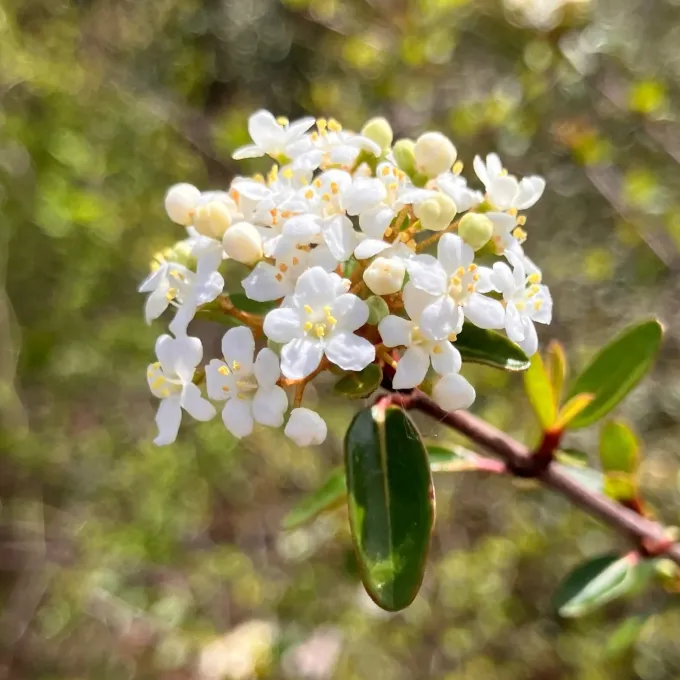
This shrub is highly valued in landscaping due to its evergreen foliage and clusters of white flowers that bloom in the spring. It serves as an excellent hedge plant or a specimen shrub in native plant gardens.
The plant performs best in moist, well-drained soils with a slightly acidic profile. While it prefers full sun for optimal flowering, it can tolerate partial shade, maintaining a clean and orderly appearance throughout the seasons.
Maintenance is minimal once the plant is established. It exhibits notable drought tolerance, but supplemental irrigation during prolonged dry spells is recommended to keep the shrub in peak aesthetic condition.
Pruning should be performed after the flowering season to manage size and shape. The species responds very well to shearing, making it suitable for formal gardens and privacy screens.
Main diseases and pests
Powdery mildew is the most common fungal issue for Viburnum obovatum, especially in regions with high humidity. Proper spacing between plants is essential to ensure adequate airflow and reduce fungal risks.
Aphids can cause significant damage to new growth in the spring. They stunt leaf development and may encourage the growth of sooty mold on the foliage due to the honeydew they secrete.
Scale insects are another pest that may affect this species. These insects attach to twigs and branches, appearing as small bumps that can sap the plant's vitality if not managed promptly.
Leaf spots caused by various fungi can be problematic during excessively wet seasons. Cleaning up fallen leaves around the base of the plant helps to reduce the inoculum load for the following year.
Regular monitoring and physical removal of minor infestations often prove sufficient for home gardens, though organic horticultural oils can be used for larger, systemic problems.